ORTHOPAEDICS - ADULT
PELVIC FRACTURES
PromptClassification systems for pelvic fractures
ResponseYoung and burgess - Based on need for surgery
Tile - based on trauma
Tile - based on trauma
PromptIdiots guide to pelvic fractures - Young Burgess classification
ResponseHorizontal rami fracture = lateral compression fracture
No rami fracture = anterior-posterior compression fracture
Vertical rami fracture (Or vertical migration of hemipelvis) = vertical shear fracture (No grade)
If its just fucked its a “combined mechanism” fracture
It will be grade 3 in the question. Its always grade 3. Its the worst
No rami fracture = anterior-posterior compression fracture
Vertical rami fracture (Or vertical migration of hemipelvis) = vertical shear fracture (No grade)
If its just fucked its a “combined mechanism” fracture
It will be grade 3 in the question. Its always grade 3. Its the worst
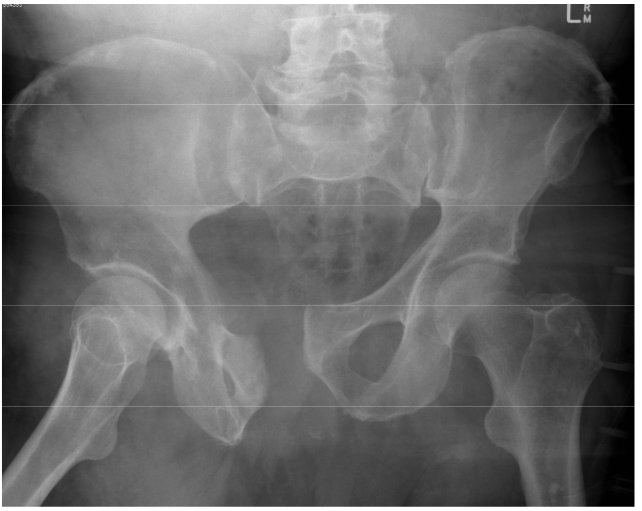
Prompt35F 10m Fall - Abnormal XR findings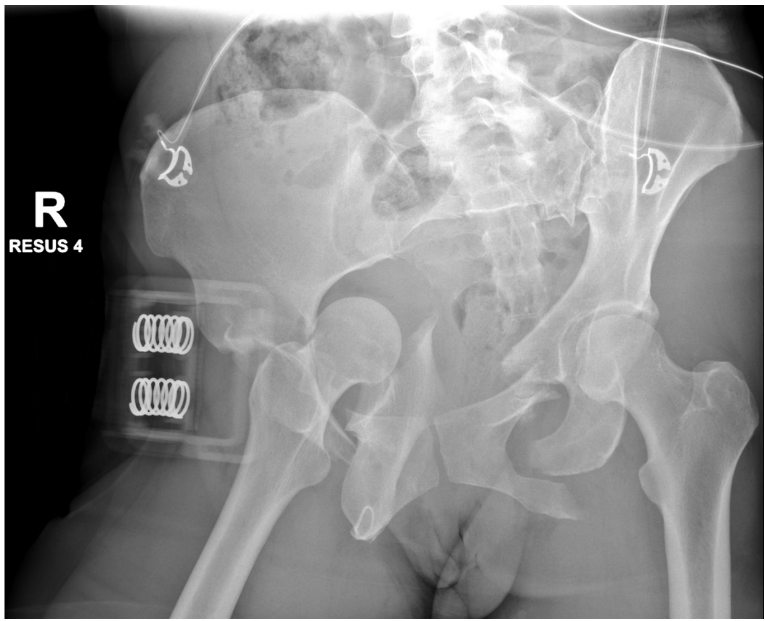
ResponseDisplaced right acetabular fracture with dislocation of the femur into the pelvis
Bilateral displaced fractures of superior and inferior pubic rami
Sacral alar fractures
Pelvic binder on and position reasonable
Bilateral displaced fractures of superior and inferior pubic rami
Sacral alar fractures
Pelvic binder on and position reasonable
PromptVertical Shear fracture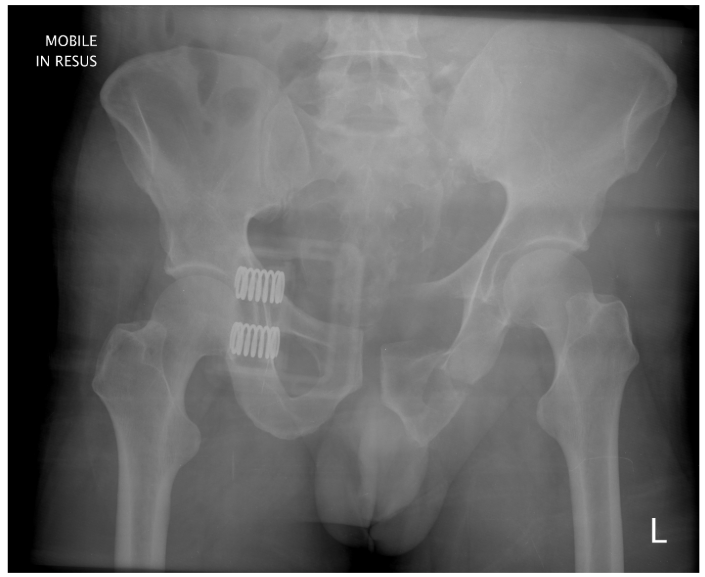
Response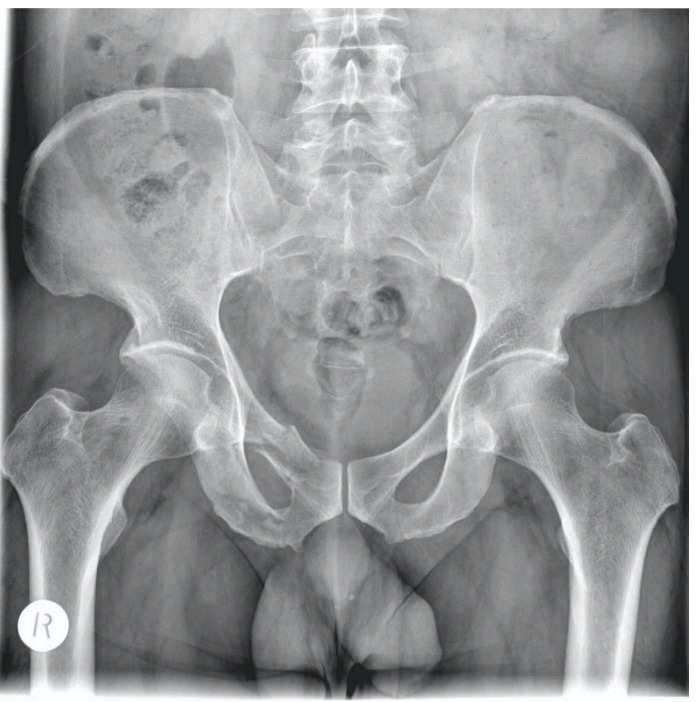
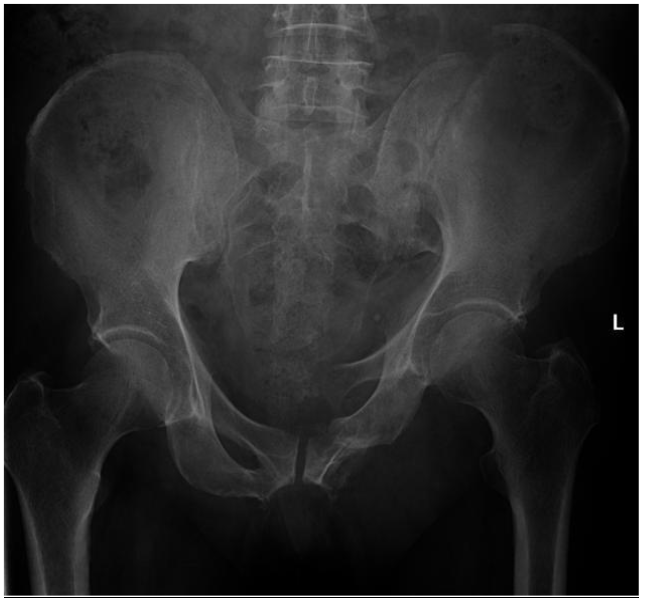
Displaced fracture through pubic symphysis & L SI joint.
Likely vascular injury causing haemodyamic instability
Needs stabilization with pelvic binder, CT Angiography if patient is stabilized and definitive
Mx in either theatre or interventional radiology.
Disposition:
Ideally CT for angiography then interventional radiology but at present too unstable for this. Consider theatre for pelvic packing.
Displaced fracture through pubic symphysis & L SI joint.
Likely vascular injury causing haemodyamic instability
Needs stabilization with pelvic binder, CT Angiography if patient is stabilized and definitive
Mx in either theatre or interventional radiology.
Disposition:
Ideally CT for angiography then interventional radiology but at present too unstable for this. Consider theatre for pelvic packing.
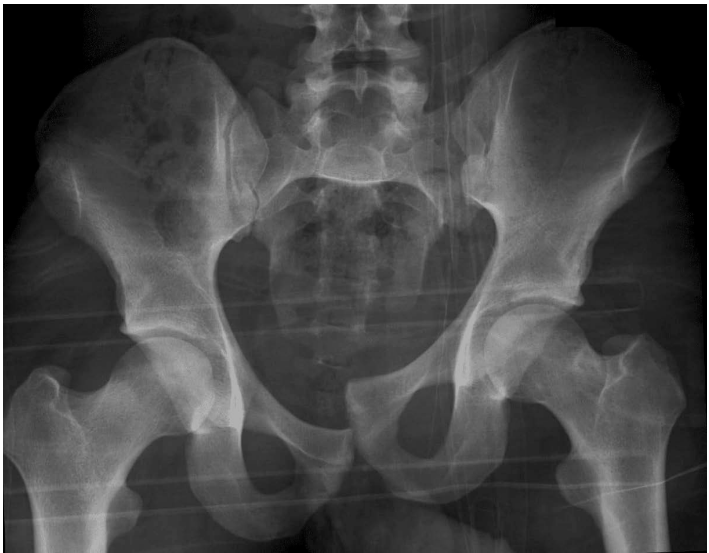
PromptAnterior-Posterior Compression Fracture 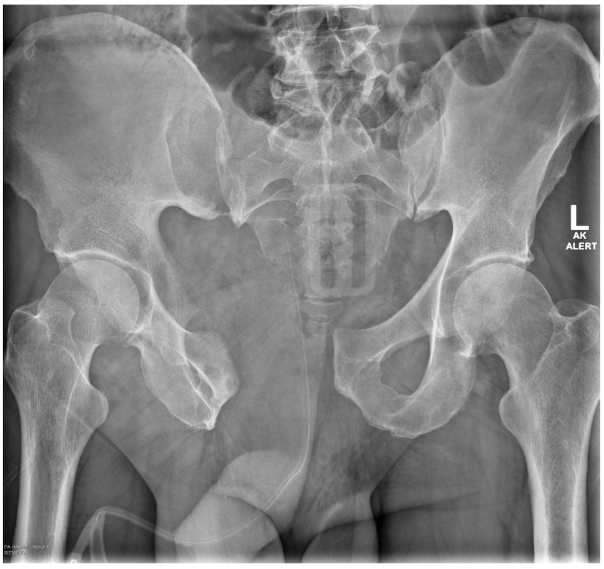
Response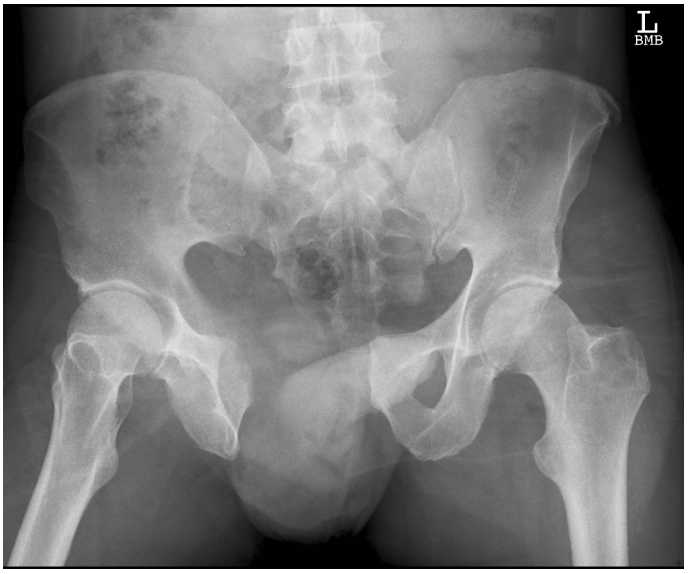
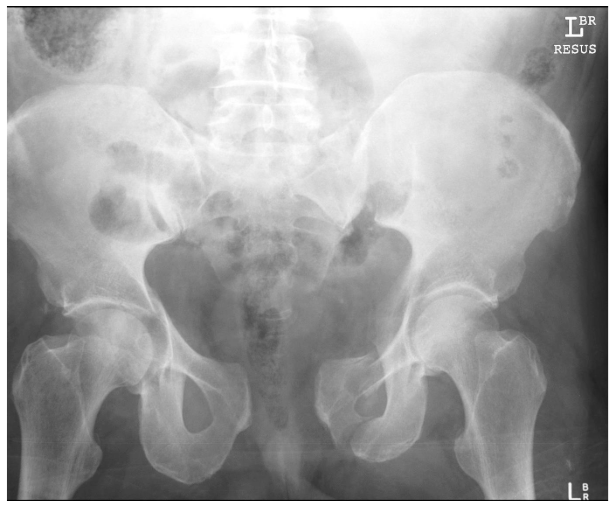
Wide symphysis pubis/Pubic diastasis
Left/Right SI joint completely disrupted
Fractured left superior and inferior pubic rami
?Binder too high (on one at least)
Large amount soft tissue swelling
= Grade 3 AP compression fracture
Wide symphysis pubis/Pubic diastasis
Left/Right SI joint completely disrupted
Fractured left superior and inferior pubic rami
?Binder too high (on one at least)
Large amount soft tissue swelling
= Grade 3 AP compression fracture
PromptInjuries associated with unstable pelvic fractures (Vertical Shear)
ResponseArterial injury eg: internal iliacs - haemorrhagic shock, tachycardia, hypotension
Urethral injury - bruised scrotum, penile blood
Prostate injury - high riding prostate
Bladder rupture - haematuria
Urethral injury - bruised scrotum, penile blood
Prostate injury - high riding prostate
Bladder rupture - haematuria
PromptInjuries associated with unstable pelvic fractures (Lateral compression)
Note: Can probably combine both
Note: Can probably combine both
ResponseBowel injury - PR blood
Urethral injury - blood at meatus, boggy perineal haematoma
Lumbosacral nerve injury - LL weakness, focal neurologic deficits
Bladder injury - Haematuria without perineal signs
Urethral injury - blood at meatus, boggy perineal haematoma
Lumbosacral nerve injury - LL weakness, focal neurologic deficits
Bladder injury - Haematuria without perineal signs
PromptTreatment priorities in unstable pelvic fracture
ResponseTXA 1g
Volume resuscitation - urgent O negative, no crystaloid. Permissive hypotension - Endpoints SBP >80, radial pulse, normal mentation
Targeted coagulation management - ROTEM vs MTP 1:1:1 (Warm blood products) - Allow permissive hypotension to minimise ongoing blood loss (If no concurrent head injury)
Pelvic binder = Attempt to close pelvic ring to minimise haemorrhage (If in XR probably state keep in situ)
Analgesia - Strong opioids +/- ketamine with dose
Seek and treat other sources of haemorrhage
Early consultation with surgery and interventional radiology
Reverse coagulopathy (Vitamin K and prothombinex?)
Intubation / ventilation = Will allow control of patient to facilitate angiography
Volume resuscitation - urgent O negative, no crystaloid. Permissive hypotension - Endpoints SBP >80, radial pulse, normal mentation
Targeted coagulation management - ROTEM vs MTP 1:1:1 (Warm blood products) - Allow permissive hypotension to minimise ongoing blood loss (If no concurrent head injury)
Pelvic binder = Attempt to close pelvic ring to minimise haemorrhage (If in XR probably state keep in situ)
Analgesia - Strong opioids +/- ketamine with dose
Seek and treat other sources of haemorrhage
Early consultation with surgery and interventional radiology
Reverse coagulopathy (Vitamin K and prothombinex?)
Intubation / ventilation = Will allow control of patient to facilitate angiography
PromptDefinitive management options for arresting blood loss in pelvic injury (non ED stuff)
ResponsePelvic binder,
interventional radiology,
pelvic packing in OT,
ORIF in OT (or Exfix)
interventional radiology,
pelvic packing in OT,
ORIF in OT (or Exfix)
PromptFactors affecting choice of management modality
ResponseAvailability of interventional radiology resources & staff vs theatre resources & staff (- eg time of day, location, hospital resources)
Haemodynamic stability of patient – better to go to OT if ongoing instability
Associated injuries of patient – better to go to OT if associated chest or abdo injuries
Results of FAST scan – positive FAST for intraabdominal bleeding should go to OT
Presence of blush on CTA of pelvis – may benefit from interventional radiology & embolization
Haemodynamic stability of patient – better to go to OT if ongoing instability
Associated injuries of patient – better to go to OT if associated chest or abdo injuries
Results of FAST scan – positive FAST for intraabdominal bleeding should go to OT
Presence of blush on CTA of pelvis – may benefit from interventional radiology & embolization
PromptPrinciples behind the use of pelvic binders
ResponseReduction and stabilisation of fracture site decreased bleeding and helps with pain control
Reduction in pelvic volume reduces the extent of potential haemorrhage
Reduction in pelvic volume reduces the extent of potential haemorrhage
PromptThe orthopaedic registrar would like to open the binder to assess for pelvic instability before transport to CT. What is your response and justification?
ResponseNo, this patient is haemodynamically compromised and opening the binder at this stage will likely worsen this
PromptCauses of deterioration in pelvic fracture
ResponsePelvic vessel bleeding - CTA look for blush
MI - ECG for STMEI pattern
Drug related - ? opioid overdose
Hyoxia - Examine chest/CXR
Septic shock - seek sources of sepsis (U/A, CXR)
MI - ECG for STMEI pattern
Drug related - ? opioid overdose
Hyoxia - Examine chest/CXR
Septic shock - seek sources of sepsis (U/A, CXR)
PromptTo panscan or not to panscan? (Prior to theatre)
ResponseCT will define head injury which may require operative intervention - no CT may miss this
CTA pelvis will be required to determine if pelvis has active bleeding/suitability of IR
Haemodynamics - unresponsive/deteriorating patient CT may delay lifesaving treatment.
CTA pelvis will be required to determine if pelvis has active bleeding/suitability of IR
Haemodynamics - unresponsive/deteriorating patient CT may delay lifesaving treatment.
PromptComplications and management of pelvis fracture
(Question was APCIII)
(Question was APCIII)
ResponseMassive pelvic haemorrhage
- Free fluid on CT +/- FAST; Blush on CT
- Management: Interventional Rad +/- OT
- Contrast extravasation/ Indistinct Bladder dome on RUG
- Management: IDC to decompress, OT for repair
- Blood at meatus/ boggy swelling in perineum
- Inability to pass IDC
- Contrast extravasation on RUG
- Management: Surgical Repair
- PR Bleeding
- Management: Surgical Repair in OT
- Foot drop/ Incontinence
- Management: Reduce Fracture +/- Nerve repair