ORTHOPAEDICS - ADULT
LISFRANC
Prompt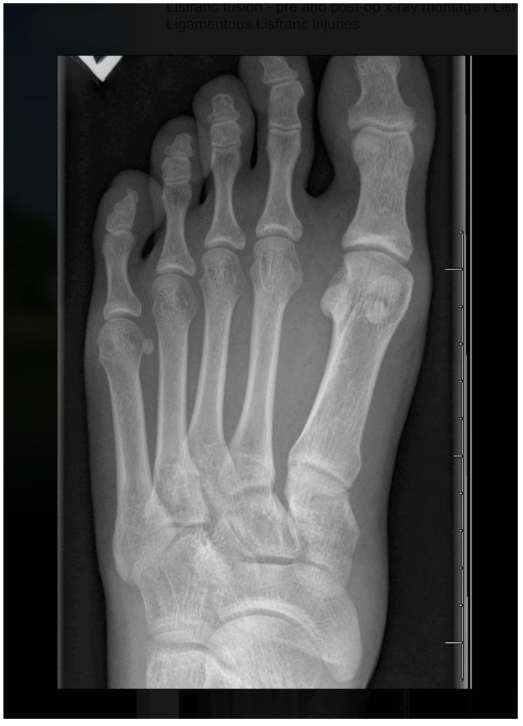
Response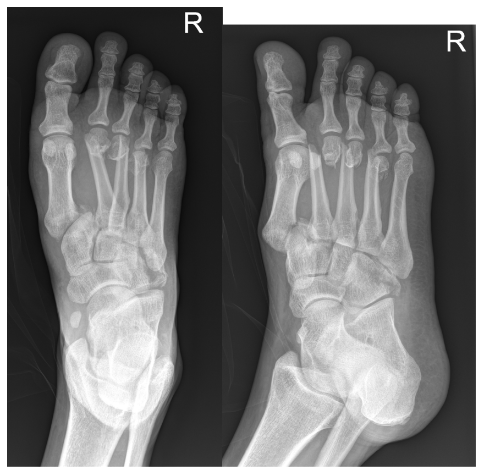
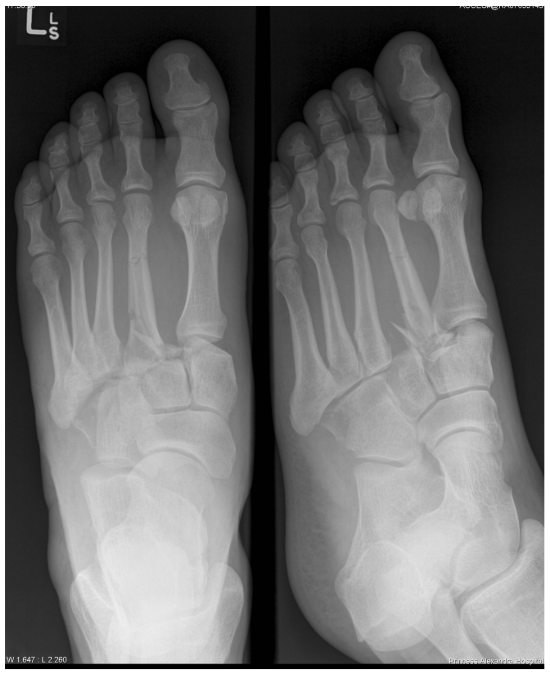
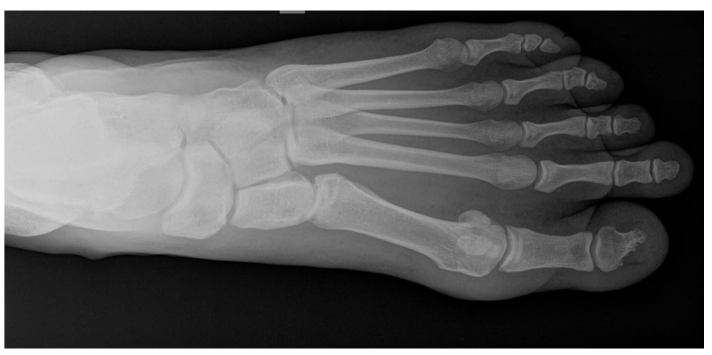
PromptXray comments
ResponseLisfranc injury - widened space between first and second metatarsals indicating ligamentous disruption
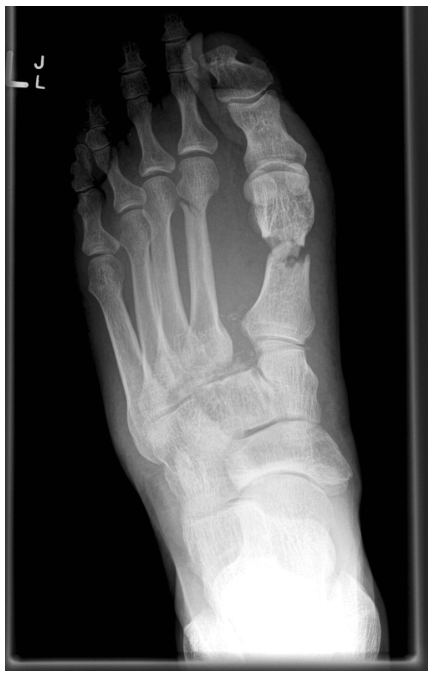
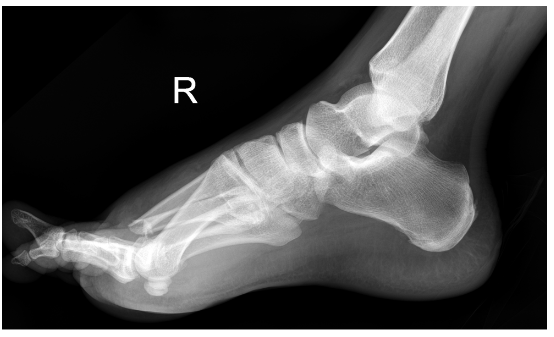
Laterally dislocated base second MT with avulsion fracture (Fracture/dislocation)
Lateral dislocation of the second to 5th metatarsals and medial dislocation of the first MT
Other fractures:
Transverse fracture firs MT mid shaft - distracted
Comminuted fracture of first to 3rd metatarsal bases, 2nd-4th MT heads, and cuboid
Oblique fracture neck of 2nd MT=
Fracture cuboid
“Marked associated soft tissue swelling around mid and forefoot”
Laterally dislocated base second MT with avulsion fracture (Fracture/dislocation)
Lateral dislocation of the second to 5th metatarsals and medial dislocation of the first MT
Other fractures:
Transverse fracture firs MT mid shaft - distracted
Comminuted fracture of first to 3rd metatarsal bases, 2nd-4th MT heads, and cuboid
Oblique fracture neck of 2nd MT=
Fracture cuboid
“Marked associated soft tissue swelling around mid and forefoot”
PromptAssociated fractures with lisfranc
ResponseBase of 2nd MT (most common)
Cuboid
Medial cuneiform
Navicular
Cuboid
Medial cuneiform
Navicular
PromptTypes of injuries causing lisfranc
ResponseDIrect - force applied to the dorsum of the foot
- MVA/Crush injury/Fall from height
- Sports - football, equestrian. Household accidents/falls
PromptComplications of Lisfranc injury
ResponseAcute:
Vascular injury - Dorsalis Pedis - loss of pulse
Foot compartment syndrome - increasing pain, loss of sensation and pulses
Lateral dislocation of the midfoot
Chronic
Loss of arch - inability to walk
Early OA and non union/loss of function
Vascular injury - Dorsalis Pedis - loss of pulse
Foot compartment syndrome - increasing pain, loss of sensation and pulses
Lateral dislocation of the midfoot
Chronic
Loss of arch - inability to walk
Early OA and non union/loss of function
PromptManagement of Lisfranc Injury
ResponseAnalgesia
If for closed reduction - Dorsiflexion of foot and pushing the Metatarsals inferiorly (under procedural sedation)
Backslab with medial support and in dorsiflexion
Exclude open injury
Orthopedic referral for operative management.
If for closed reduction - Dorsiflexion of foot and pushing the Metatarsals inferiorly (under procedural sedation)
Backslab with medial support and in dorsiflexion
Exclude open injury
Orthopedic referral for operative management.
A Lisfranc injury is a tarsometatarsal fracture dislocation characterized by traumatic disruption between the articulation of the medial cuneiform and base of the second metatarsal.
Diagnosis is confirmed by radiographs which may show widening of the interval between the 1st and 2nd ray. - Orthobullets