NEUROLOGY + NEUROSURGERY
STROKE
PromptRisk factors for stroke
ResponseHTN
DM
Lipids
Male
Age
AF
Valvular heart disease
CCF
IHD
(think AF + CHADS2VASC)
DM
Lipids
Male
Age
AF
Valvular heart disease
CCF
IHD
(think AF + CHADS2VASC)
PromptDifferentials for stroke
(Stroke mimics)
(Stroke mimics)
ResponseBrain:
Intracranial haemorrhage - Headache, anticoagulant use - differential for ISHCAEMIC stroke but it kind of is a stroke so not differential for stroke
Hemiplegic Migraine - preceding aura, migraine history
Mass lesion (~9%) - tumours, cerebral abscess. CT brain findings, history of cancer. Fever if abscess
MS - known history of MS
Seizures/Todds paresis (~21%!) - post ictal, bitten tongue etc.
Non brain:
Toxic/metabolic (11%)
Bells palsy - LMN face palsy (Forehead NOT spared)
Syncope (9%) - cardiac disease, ECG/monitoring abnormality,
Intracranial haemorrhage - Headache, anticoagulant use - differential for ISHCAEMIC stroke but it kind of is a stroke so not differential for stroke
Hemiplegic Migraine - preceding aura, migraine history
Mass lesion (~9%) - tumours, cerebral abscess. CT brain findings, history of cancer. Fever if abscess
MS - known history of MS
Seizures/Todds paresis (~21%!) - post ictal, bitten tongue etc.
Non brain:
Toxic/metabolic (11%)
- Hypoglycaemia - poor food intake, insulin use, low sugar on glucometer
- Metabolic - hyponatraemia, hepatic encephalopathy,
- Tox (lithium, phenytoin, carbemazepine) - blood tests, PMHx
Bells palsy - LMN face palsy (Forehead NOT spared)
Syncope (9%) - cardiac disease, ECG/monitoring abnormality,
PromptDysphasia vs aphasia vs dysarthria.
ResponseAphasia/Dysphasia is a disorder of language affecting the generation and content of speech and its understanding. Usually produced in dominant hemisphere (L side in R handed person). Expressive = difficulty producing words, Receptive = difficulty understanding.
Dysarthria is a speech disorder in which the pronunciation is unclear but language and content are normal
Dysarthria is a speech disorder in which the pronunciation is unclear but language and content are normal
PromptMCA infarct signs (note MCA infarcts are 51% of ischaemic infarcts! It’ll probably be MCA in the exam)
ResponseContralateral hemiparesis face + Arm >Leg
Contralateral hemisensory loss
Contralateral visual field deficit (homonomous hemianopia/quadrantinopia)
Dominant side lesion = dysphasia/aphasia (expressive and receptive)
Eyes deviated to side of lesion
Contralateral hemisensory loss
Contralateral visual field deficit (homonomous hemianopia/quadrantinopia)
Dominant side lesion = dysphasia/aphasia (expressive and receptive)
Eyes deviated to side of lesion
PromptMCA infarct CT’s findings
Response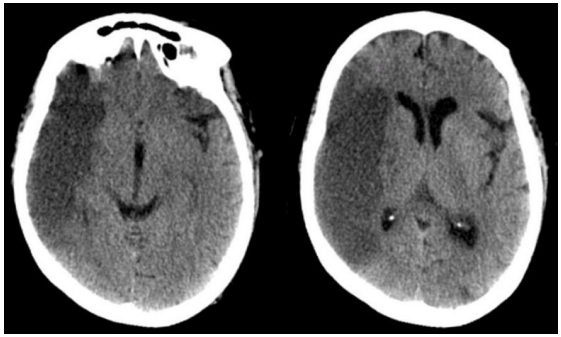
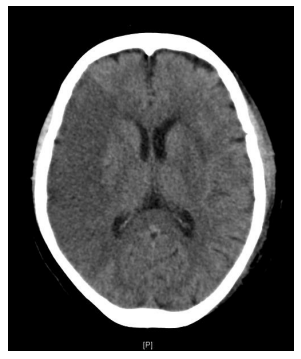
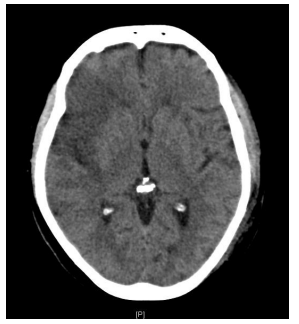 Right perisylvian and insular cortex hypodensity
Consistent with Acute Right MCA infarct (Superior and inferior division affected)
No haemorrhagic complications
Right perisylvian and insular cortex hypodensityConsistent with Acute Right MCA infarct (Superior and inferior division affected)
No haemorrhagic complications
PromptWTF is this on a CT
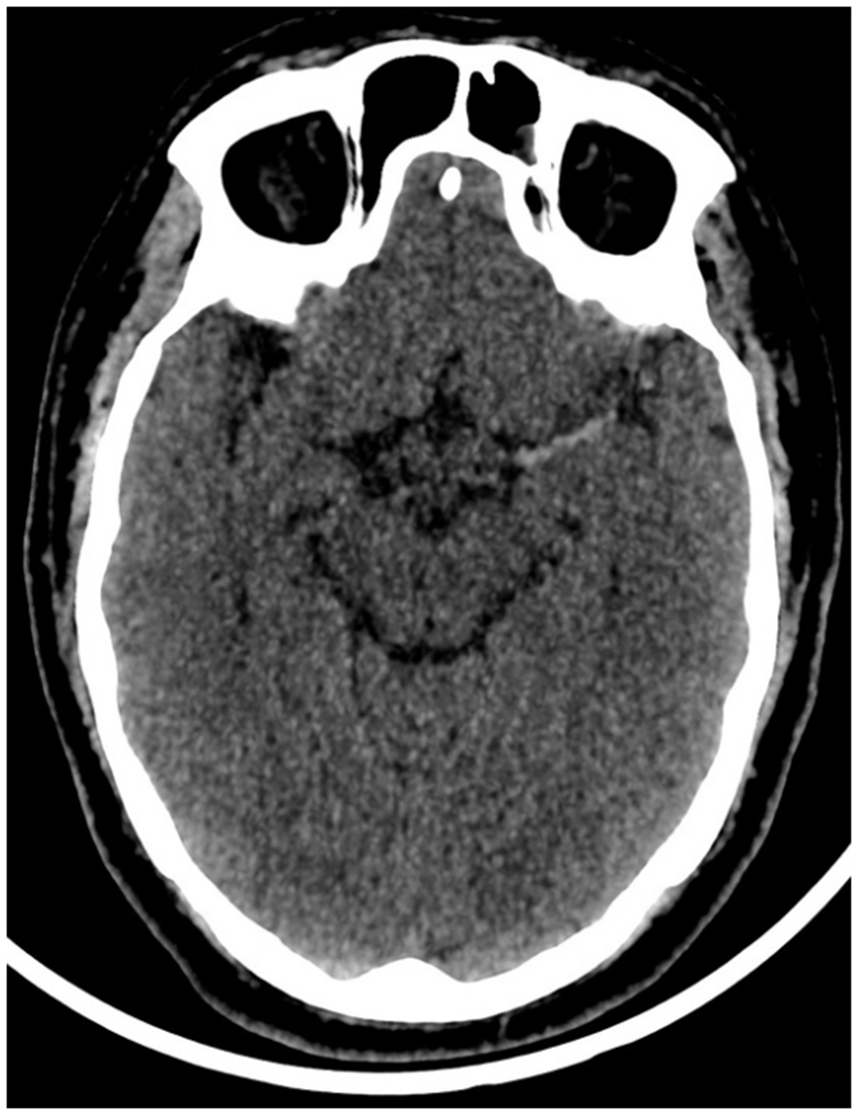
ResponseLeft sided “hyperdense MCA sign” = is an indicator of acute occlusive thrombosis and ischemic stroke.
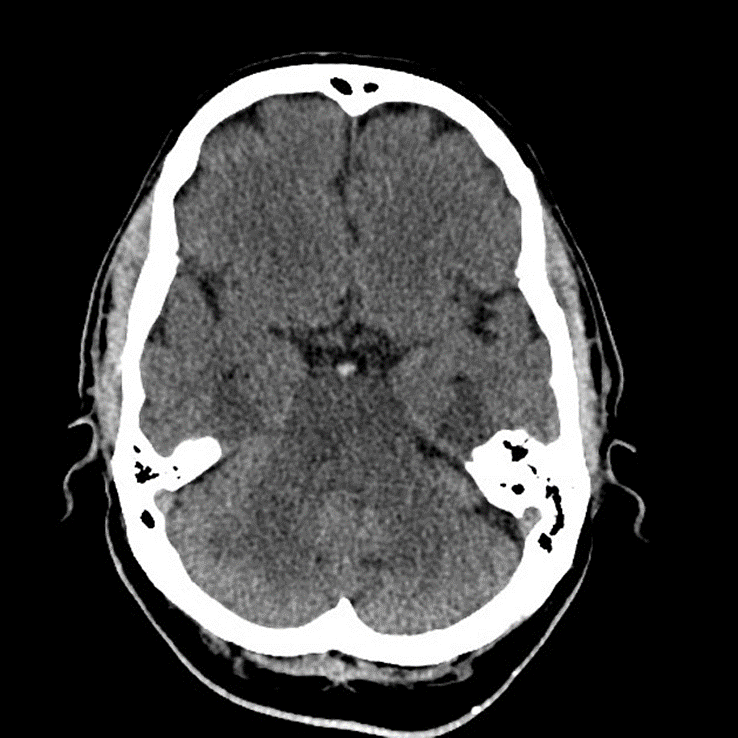
Above is same but Hyperdense Basilar artery sign (no bleed or ischaemia seen) suggestive of basilar artery stroke
Above is same but Hyperdense Basilar artery sign (no bleed or ischaemia seen) suggestive of basilar artery stroke
PromptPerfusion scan findings suggesting reperfusion therapy
ResponseEvidence of large vessel occlusion
Small ischaemic core
Large ischaemic penumbra
Absence of haemorrhage
No signs of completed stroke (oedema, loss of grey/white differentiation)
No contraindications to thrombolytic therapy (AVM, brain tumour, unsecured aneurysm >10mm)
Small ischaemic core
Large ischaemic penumbra
Absence of haemorrhage
No signs of completed stroke (oedema, loss of grey/white differentiation)
No contraindications to thrombolytic therapy (AVM, brain tumour, unsecured aneurysm >10mm)
PromptStroke management
ResponseShould activate stroke call (if available)
Inform senior ED doctor, focussed history and examination, Bloods sent, proceed to urgent CT brain
Detailed examination including NIHSS score, disability assessment, modified rankin score
Reperfusion therapy (Lysis vs Clot retrieval - see other questions)
Disposition - ICU/Stroke unit
Inform senior ED doctor, focussed history and examination, Bloods sent, proceed to urgent CT brain
Detailed examination including NIHSS score, disability assessment, modified rankin score
Reperfusion therapy (Lysis vs Clot retrieval - see other questions)
Disposition - ICU/Stroke unit
PromptThrombolytic (Fibrinolysis) therapy criteria
ResponseInclusion criteria
Clinically suspected CVA
<3 hours (<4.5 horus) - up to 9 hours with clot retrieval/advanced imaging
impairment /deficit measurable on NIHSS
age >18
Baseline CT with no evidence of ICH
Consent!
Exclusion criteria
ICH on CT
NIHSS <=4 or >=24
Evidence of active bleeding or acute trauma (Recent stroke/MI/Trauma/GI bleeding (21 days)/Surgery (<14 days days)
Very large CVA on CT or clinically very severe symptoms
Noac/warfarin (INR>1.5)
Plt <100
Glucose <2.8, >22
SBP >180, DBP >110
Resolving signs
Septic embolus
(As a reminder: STEMI contraindications are: Absolute - Symptoms >12h, BP >180/110, Trauma/bleeding/surgery <1 month, Ischaemic stroke <3 months, ICH ever, Allergy to thrombolytic agent. Relative INR >1.8/anticoagulation use/bleeding disorder)
Alteplase 0.9mg/kg - 10% as bolus, 90% infusion over 60 mins
Clinically suspected CVA
<3 hours (<4.5 horus) - up to 9 hours with clot retrieval/advanced imaging
impairment /deficit measurable on NIHSS
age >18
Baseline CT with no evidence of ICH
Consent!
Exclusion criteria
ICH on CT
NIHSS <=4 or >=24
Evidence of active bleeding or acute trauma (Recent stroke/MI/Trauma/GI bleeding (21 days)/Surgery (<14 days days)
Very large CVA on CT or clinically very severe symptoms
Noac/warfarin (INR>1.5)
Plt <100
Glucose <2.8, >22
SBP >180, DBP >110
Resolving signs
Septic embolus
(As a reminder: STEMI contraindications are: Absolute - Symptoms >12h, BP >180/110, Trauma/bleeding/surgery <1 month, Ischaemic stroke <3 months, ICH ever, Allergy to thrombolytic agent. Relative INR >1.8/anticoagulation use/bleeding disorder)
Alteplase 0.9mg/kg - 10% as bolus, 90% infusion over 60 mins
PromptCT findings suggestive of poor outcome with thrombolytic therapy
ResponseCortical hypodensity in >⅓ of MCA territory
Sulcal effacement
Mass effect
Cerebral oedema
Sulcal effacement
Mass effect
Cerebral oedema
PromptRisks/benefits of Lysis
ResponseNINDS trial
Likelihood of improvement in function outcome with lysis - 30% more likely to have minimal to no disability - “Small but significant chance of improved neurologic outcome at 90 days”
Risk of symptomatic ICH 6.4% (?7%) (vs 0.6%) - 3% fatal
No overall mortality benefit - Overall mortality at 3 months no difference
NSYD 2016.2-19, PAH 2020.2
2016 ACEM review - IV thrombolysis, particularly within 3 hours of symptom onset, increases the odds of a better functional outcome, but also increases the risk of ICH and early death by ICH
NNT 10 (for good function outcome)
NNH (ICH) =42
NNH (Death) = 122
Life threatening bleeding 1-3%, major haemorrhage 6%
Likelihood of improvement in function outcome with lysis - 30% more likely to have minimal to no disability - “Small but significant chance of improved neurologic outcome at 90 days”
Risk of symptomatic ICH 6.4% (?7%) (vs 0.6%) - 3% fatal
No overall mortality benefit - Overall mortality at 3 months no difference
NSYD 2016.2-19, PAH 2020.2
2016 ACEM review - IV thrombolysis, particularly within 3 hours of symptom onset, increases the odds of a better functional outcome, but also increases the risk of ICH and early death by ICH
NNT 10 (for good function outcome)
NNH (ICH) =42
NNH (Death) = 122
Life threatening bleeding 1-3%, major haemorrhage 6%
PromptIndications for clot retrieval
(note they can also do catheter guided thrombolysis)
(note they can also do catheter guided thrombolysis)
ResponseNIHSS >=6
Pre stroke rankin score <=1
Acute ischaemic stroke from occlusion of proximal clot
Arterial access can occur within 24 hours of stroke onset
Pre stroke rankin score <=1
Acute ischaemic stroke from occlusion of proximal clot
- Internal carotid
- M1
- Dominant vertebral
- Basila
- M2 if NIHSS >2 and ineligible for lysis
Arterial access can occur within 24 hours of stroke onset
PromptStrategies for managing stroke
ResponseDAPT (Aspirin 100 mg + clopidogrel 75mg)
Assist swallows
ICU/Stroke unit
BP control
Temp - aim normothermia
Glucose - aim euglycaemia
IDC/NGT
Allied health/physio
DVT prophylaxis
Electrolytes (Be aware of hyponatraemia)
Assist swallows
ICU/Stroke unit
BP control
Temp - aim normothermia
Glucose - aim euglycaemia
IDC/NGT
Allied health/physio
DVT prophylaxis
Electrolytes (Be aware of hyponatraemia)
PromptApproach to BP management in stroke
ResponseBP targets
Not thrombolysed - <220/120
Thrombolysed - <180/110
Haemorrhagic - <140/100, avoid hypotension
Drugs
Labetalol 5-10 mg Q10 min IV
Hydralazine 5 mg Q10 min IV
Metoprolol 2.5-5mg Q10 min IV
Clonidine 75-100 mics Q10 min (Ischaemic stroke only)
Not thrombolysed - <220/120
Thrombolysed - <180/110
Haemorrhagic - <140/100, avoid hypotension
Drugs
Labetalol 5-10 mg Q10 min IV
Hydralazine 5 mg Q10 min IV
Metoprolol 2.5-5mg Q10 min IV
Clonidine 75-100 mics Q10 min (Ischaemic stroke only)
- NSLHD Stroke guidelines
PromptNIHSS Score
ResponseProbably need rough awareness of this not wrote learning.
National Institute of Health Stroke Scale - stroke severity scale scored 0-42. 1-4 = minor, >20 = Severe
Domains include: Level of consciousness, Horizontal eye movement, visual fields, facial palsy, motor - arm, Motor leg, limb ataxia, sensory, language/aphasia, speech/dysarthria, and extinction/inattention.
National Institute of Health Stroke Scale - stroke severity scale scored 0-42. 1-4 = minor, >20 = Severe
Domains include: Level of consciousness, Horizontal eye movement, visual fields, facial palsy, motor - arm, Motor leg, limb ataxia, sensory, language/aphasia, speech/dysarthria, and extinction/inattention.
PromptModified Rankin Scale
ResponseMeasures the degree of disability or dependence in the daily activities of people who have suffered a stroke or other causes of neurological disability. Scored 0-6
0=fully functional
3= dependent but walking
6 = dead
0=fully functional
3= dependent but walking
6 = dead
PromptTIA
ResponseTransient episode of neurological dysfunction caused by focal brain, spinal cord or retinal ischaemia, without acute infarction - American stroke association
Definition is debated as some TIA’s have small infarct on MRI and are thus actually strokes not TIA’s
Definition is debated as some TIA’s have small infarct on MRI and are thus actually strokes not TIA’s
PromptList the ABCD2 score
ResponseABCD2
Age >65 = 1
BP >145/90 = 1
Clinical features (unilateral weakness =2, speech impairment without weakness =1)
Duration of symptoms (>60 min =2, 10-59 mins =1)
D(2) Diabetus =1
90 day stroke risk: 0-3 ~2%, 4-5 ~ 12%, 6-7~ 18%
Age >65 = 1
BP >145/90 = 1
Clinical features (unilateral weakness =2, speech impairment without weakness =1)
Duration of symptoms (>60 min =2, 10-59 mins =1)
D(2) Diabetus =1
90 day stroke risk: 0-3 ~2%, 4-5 ~ 12%, 6-7~ 18%