OPHTHALMOLOGY
PAINLESS UNILATERAL VISUAL LOSS
PromptList causes of painless unilateral vision loss
ResponseOphthalmologic: CRAO, CRVO, vitreous hemorrhage, retinal detachment, Optic neuritis,
Non Ophthalmologic: Temporal arteritis, TIA/Stroke/Amiurosis fugax
Non Ophthalmologic: Temporal arteritis, TIA/Stroke/Amiurosis fugax
PromptList risk factors of, and cardinal findings in the following
ResponseNote question was a brief summary of all of these!
PromptCRAO (+ mgmt)
ResponseRisks: AF, ICA plaque, infective emboli, vasculitis (SLE/GCA), IVDU (Embolism)
Hx - sudden onset. (STEM was 30 yo F IVDU, painless loss VA 6/60)
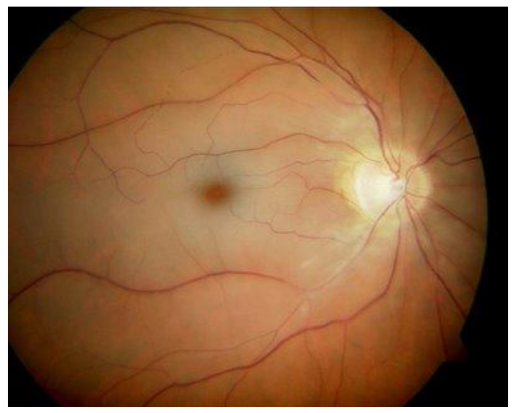
Ex: Pale retina (White oedema) with cherry red spots (Fovea), Pale optic disk, possible embolus observed/arteriolar cut off. RAPD. V/A <6/60
Inv: Embolic workup (TTE/Carotid dopplers), Inflammatory markers if suspect vasculitis
Answer: (Basically people try lots of stuff for this)
Mgmt: Ophthal referral, Anticoagulation with heparin, localised pressure to eye, identify source of emboli.
Others: Anterior chamber paracetnesis - reduce pressure and dislodge clot
Hyperbaric O2 - reduce retinal ischaemia.
High CO2 >> vasodilation>> dislodge clot?
Occular massage - dislodge embolus
TPA - lyse clot - Eagle study suggests risks outweigh benefits - Avoid.
From Research: (Basically there is nothing that works)
Stroke workup/stroke call
Ophthalmology review
Attempt to dislodge the clot
Hx - sudden onset. (STEM was 30 yo F IVDU, painless loss VA 6/60)
Ex: Pale retina (White oedema) with cherry red spots (Fovea), Pale optic disk, possible embolus observed/arteriolar cut off. RAPD. V/A <6/60
Inv: Embolic workup (TTE/Carotid dopplers), Inflammatory markers if suspect vasculitis
Answer: (Basically people try lots of stuff for this)
Mgmt: Ophthal referral, Anticoagulation with heparin, localised pressure to eye, identify source of emboli.
Others: Anterior chamber paracetnesis - reduce pressure and dislodge clot
Hyperbaric O2 - reduce retinal ischaemia.
High CO2 >> vasodilation>> dislodge clot?
Occular massage - dislodge embolus
TPA - lyse clot - Eagle study suggests risks outweigh benefits - Avoid.
From Research: (Basically there is nothing that works)
Stroke workup/stroke call
Ophthalmology review
Attempt to dislodge the clot
- Occular massage - 10s pressure, 5s release + repeat
- Anterior chamber paracentesis (by ophthal)
PromptCRVO
ResponseRisks: Htn, Diabetes, Atherosclerosis, glaucoma, hypercoagulablity
Hx Sudden onset (minutes)
Ex: Retinal hemorrhages, “Blood and thunder” retina. Abnormal red reflex, arteriolar narrowing, but tortuous and engorged retinal veins.
Inv: BSL, IOP, Coags (if young)
No known effective treatment exists
Commonly given - Aspirin, anticoagulation, thrombolysis
Intravitreal growth factor inhibitors (by Ophthal)
Hx Sudden onset (minutes)
Ex: Retinal hemorrhages, “Blood and thunder” retina. Abnormal red reflex, arteriolar narrowing, but tortuous and engorged retinal veins.
Inv: BSL, IOP, Coags (if young)
No known effective treatment exists
Commonly given - Aspirin, anticoagulation, thrombolysis
Intravitreal growth factor inhibitors (by Ophthal)
PromptRetinal detachment
ResponseRisks: Age, Myopia (near sightedness), trauma/cataract surgery, prior detachement, connective tissue disease
Hx: preceding flashers/floaters. shade/curtain over eye, slower onset
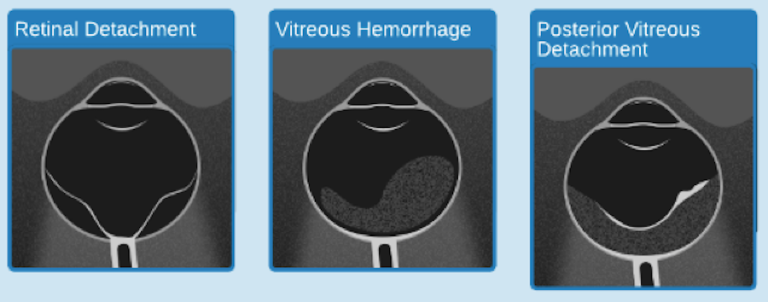
Ex: Abnormal red reflex. Retinal curtain on fundoscopy, Corrugated retina, Focal change with visible transition to normal retina (mobile detached retina seen)
Hx: preceding flashers/floaters. shade/curtain over eye, slower onset
Ex: Abnormal red reflex. Retinal curtain on fundoscopy, Corrugated retina, Focal change with visible transition to normal retina (mobile detached retina seen)
PromptRetinal haemorrhage
ResponseHtn, diabetes, atherosclerosis
Retinal haemorrhage on examination
Retinal haemorrhage on examination
PromptVitreal haemorrhage
ResponseTrauma, Prolific diabetic retinopathy
Inability to visualise retina, blood posterior to chamber
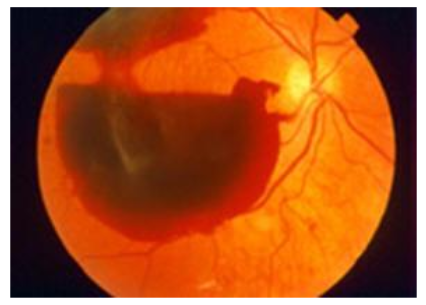
Inability to visualise retina, blood posterior to chamber
PromptVitreous Haemorrhage - clinical presentation
ResponsePainless
Floaters and cobwebbing (minor haemorrhage)
Visual haze/loss (more extensive haemorrhages)
Absent red reflex
Weiss ring on fundoscopy, retina obscured
Floaters and cobwebbing (minor haemorrhage)
Visual haze/loss (more extensive haemorrhages)
Absent red reflex
Weiss ring on fundoscopy, retina obscured
PromptOptic neuritis
ResponseRisk: MS (Female 18-45)
Hx: Onset hours to days, pain on eye movement, other focal neurologic SYMPTOMS
Ex: RAPD, Optic disc oedema - Papillitis, Other focal neurologic SIGNS
Hx: Onset hours to days, pain on eye movement, other focal neurologic SYMPTOMS
Ex: RAPD, Optic disc oedema - Papillitis, Other focal neurologic SIGNS
PromptDisk Oedema vs Papilloedma
ResponseOptic disk oedema is secondary to optic neuropathy of any cause - inflammatory, infiltrative, compressive
Papilloedema is secondary to raised ICP only
Papilloedema is secondary to raised ICP only
PromptGCA/Arteritic ischaemic optic neuropathy
ResponseHx: Temporal headaches, fevers, night sweats. Jaw claudication, myalgias
Ex: RAPD, Tender temporal artery. Optic disk oedema on fundoscopy
Ex: RAPD, Tender temporal artery. Optic disk oedema on fundoscopy
PromptInvestigations in painless unilateral visual loss
ResponseECG - ? AF as embolic source for CRAO
BSL - ? diabetic for vitreous haemorrhage
MRI - ? MS if considering optic neuritis
ESR - ? GCA
FBC - Hyperviscosity/platelets
Coags - ? Coagulopathy
Ultrasound ? retinal detachment vs vitreous haemorrhage
CT/CTA/Carotid ultrasound - ?Embolic source in CRAO
BSL - ? diabetic for vitreous haemorrhage
MRI - ? MS if considering optic neuritis
ESR - ? GCA
FBC - Hyperviscosity/platelets
Coags - ? Coagulopathy
Ultrasound ? retinal detachment vs vitreous haemorrhage
CT/CTA/Carotid ultrasound - ?Embolic source in CRAO
PromptULTRASOUND
ResponseCos ACEM love ultrasound