PAEDIATRICS
MEASLES
Fever, malaise, cough, coryza, conjunctivitis, Koplik spots


Prompt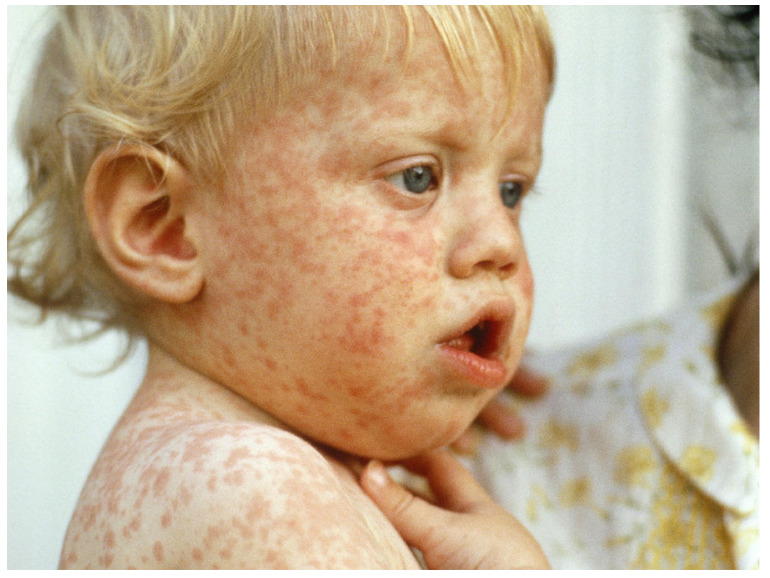
ResponseWidespread rash - face/ears/neck torso
Erythematous
Macular
Areas of confluence
Less prevalent dorsum R hand
Dry lips/tongue/MM
Circumoral sparing - pallor (around mouth)
No conjunctivitis
Differentials
Measles, other virus (eg: Rubella)
Urticarial - allergy, other
Scarlet fevers
Drug rash
Erythema multiforme
Kawasaki
Investigation
Measles PCR - nasopharyngeal swab
Strep - ASOt/anti DNAase B
Inflammatory markers if concerned for Kawasaki - CRP/ESR
Erythematous
Macular
Areas of confluence
Less prevalent dorsum R hand
Dry lips/tongue/MM
Circumoral sparing - pallor (around mouth)
No conjunctivitis
Differentials
Measles, other virus (eg: Rubella)
Urticarial - allergy, other
Scarlet fevers
Drug rash
Erythema multiforme
Kawasaki
Investigation
Measles PCR - nasopharyngeal swab
Strep - ASOt/anti DNAase B
Inflammatory markers if concerned for Kawasaki - CRP/ESR
PromptMeasles Rash Differentials
ResponseRubella (Rubivirus)
Roseola (HHV 6 virus)
Primary herpes
Varicella (Chickenpox)
Erythema infectiosum (5th disease) - Parvovirus B19 “Slapped cheek”
Kawasaki disease
Scarlet fever
Drug reaction, SJS, Erythema marginatum
Non specific viral exanthem
Mycoplasma
Rickettsial
Juvenile rheumatoid arthritis
Roseola (HHV 6 virus)
Primary herpes
Varicella (Chickenpox)
Erythema infectiosum (5th disease) - Parvovirus B19 “Slapped cheek”
Kawasaki disease
Scarlet fever
Drug reaction, SJS, Erythema marginatum
Non specific viral exanthem
Mycoplasma
Rickettsial
Juvenile rheumatoid arthritis
PromptClinical features of measles
ResponseHistory
- Rash D3-5 of fever
- Starts on face and spread to rest of body
- Unimmunissed
- Contact history
- Outbreak of measles cough
- Koplik’s spots D3
- Conjunctival injection
- Coryza
- Looks toxic
- Maculopaular rash cephalocaudal
PromptConfirmation of Measles
ResponseMeasles IgG/IgM serology
Nasal PCR
Nasal PCR
PromptManagement of measles (non patient)
ResponseNotify public health of diagnosis
Check rest of family - contact and immunisation status. Offer MMR/immunoglobulin if appropriate.
Staff - Immunisation if required, Check for pregnant/high risk contacts
High risk contacts - Admit, single room Measles Immunoglobulin
Educate staff - should have had private room from triage, resp isolation
Explain to family about expected course of disease
Explain how to get help on leaving ED
Check rest of family - contact and immunisation status. Offer MMR/immunoglobulin if appropriate.
Staff - Immunisation if required, Check for pregnant/high risk contacts
High risk contacts - Admit, single room Measles Immunoglobulin
Educate staff - should have had private room from triage, resp isolation
Explain to family about expected course of disease
Explain how to get help on leaving ED
PromptComplications of measles
ResponsePneumonitis
Meningitis/encephalitis
Otitis media
Acute sclerosing panencephalitis
Dehydration
Meningitis/encephalitis
Otitis media
Acute sclerosing panencephalitis
Dehydration
PromptPATECHIAE/PURPURA
ResponseHSP = vasculitis (not platelets)
ITP = low platelets, non toxic kid
TTP/HUS = low platelets and toxic
Sepsis + DIC = Toxic AF
ITP = low platelets, non toxic kid
TTP/HUS = low platelets and toxic
Sepsis + DIC = Toxic AF
Prompt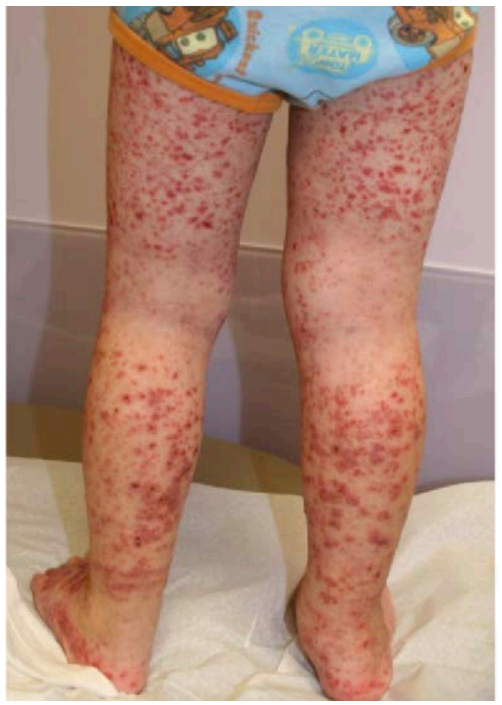
ResponseDiscreet lesions of varyinc size, Looks like purpura but would need to attempt blanching, Some purple discolouration ? bruising. Distribution
PromptPatechiae vs Purpura
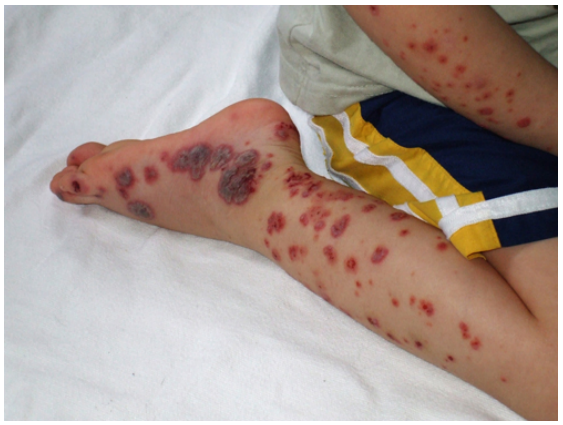
ResponsePatechiae = small (pinpoint) purpuric lesion <2mm across
Purpura = larter non blanching spots
Non palpable
Non blanching
Purpura = larter non blanching spots
Non palpable
Non blanching
PromptDifferentials for non blanching rash in child
ResponseThrombocytopaenia
- Increased destruction: ITP, TTP
- Decreased production - Malignancy (Leukaemia), aplastic anaemia, drug induced, radiation, lymphoproliferative disorders
- Sequestration
- Congenitl
- Acquired - Drugs/toxin induced (NSAID’s)
- Congential - factor VIII deficiency, Von Willebrand Disease
- Acquired - Liver disease, uraemia, vit K deficiency
- Trauma/increased venous pressure - coughing, vomiting, tourniquet, strangulation (NAI)
- Vasculitis - HSP, SLE
- Toxins - Penicillins, steroids, sulfonamides
- Sepsis - DIC, HUS, Infection (TORCH, viral, bacterial)
PromptInvestigations in patechiae/purpura
ResponseFBC - platelets/cell lines - ITP/Malignancy
Urinalysis - Protein/blood with HUS or HSP
Inflammatory markers (WCC/CRP) CRP <8 is reassuring, WCC 5-15 reassuring
EUC - renal failure in HSP
Coags
Cultures if concerned
Urinalysis - Protein/blood with HUS or HSP
Inflammatory markers (WCC/CRP) CRP <8 is reassuring, WCC 5-15 reassuring
EUC - renal failure in HSP
Coags
Cultures if concerned
PromptAntibiotics for purpura
ResponseCover sepsis
Cefotaxime/ceftriaxone 50 mg/kg + flucloacillin 50 mg/kg
Cefotaxime/ceftriaxone 50 mg/kg + flucloacillin 50 mg/kg
PromptSafe discharge in patechiae/purpura
ResponseNormal obs
Lack of fever
Low risk sinister cause (CRP<8, WCC 5-15)
Period of observation and stable
Senior review
Safety netting explained - reasons to represent
Appropriate early follow up arranged (Paed/GP)
Lack of fever
Low risk sinister cause (CRP<8, WCC 5-15)
Period of observation and stable
Senior review
Safety netting explained - reasons to represent
Appropriate early follow up arranged (Paed/GP)
PromptHenoch Scholein Purpura
ResponseHSP is the most common vasculitis of childhood, commonly children 2-8 years of age
- Urinalysis and blood pressure measurement must be done when HSP is suspected
- Most cases are self limiting and require only symptomatic treatment
- Close follow up is critical to identify significant renal involvement requireint intervention. Renal involvement is ususally asymptomatic.
- Arthritis/arthralgia (50-73%)
- Abdominal pain (50%)
- Nephritis (25-50%)
PromptComplications of HSP
ResponseKidney damage - Glomerulonephriti, Renal failure
Intussusception
GIT haemorrhage
Orchitis
Testicular torsion
Intussusception
GIT haemorrhage
Orchitis
Testicular torsion
PromptPURPURA + MENINGITIS
Response
PromptBacterial causing purpura
ResponseNeisseria meningiditis
Strep pneumoniae
Haemophilus influenzae
S. Aureus
Strep pneumoniae
Haemophilus influenzae
S. Aureus
PromptInvestigations
ResponseBlood culture - Before antibiotics to guide future treatment
BSL - manage hypoglycaemia - common in overwhelming sepsis
VBG - Devine severity of illness, acidaemia, lactaemia
BSL - manage hypoglycaemia - common in overwhelming sepsis
VBG - Devine severity of illness, acidaemia, lactaemia
PromptTreatment
ResponseCefotaxime/Ceftriaxone 50mg/kg + vancomycin 30 mg/kg
(+/- fluclox +/- gent)
IV N/S 20 mL/kg bolus
(+/- fluclox +/- gent)
IV N/S 20 mL/kg bolus
PromptComplications
ResponseDIC (high INR/D dimer/aPPT, Low platelets + fibrinogen)
Acute renal failure
Ischaemic hepatitis
Brain injury
Limb ischaemia/amputation
Death
Acute renal failure
Ischaemic hepatitis
Brain injury
Limb ischaemia/amputation
Death
PromptDESQUAMATING RASH
Response
Prompt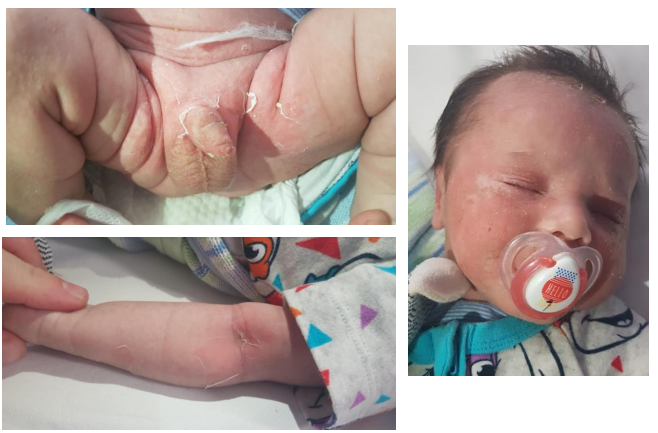
Response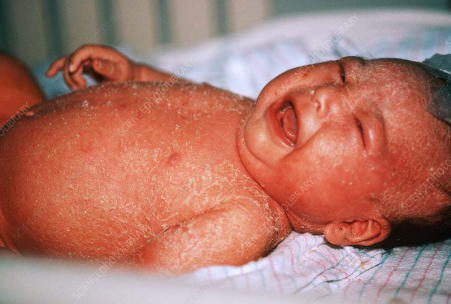
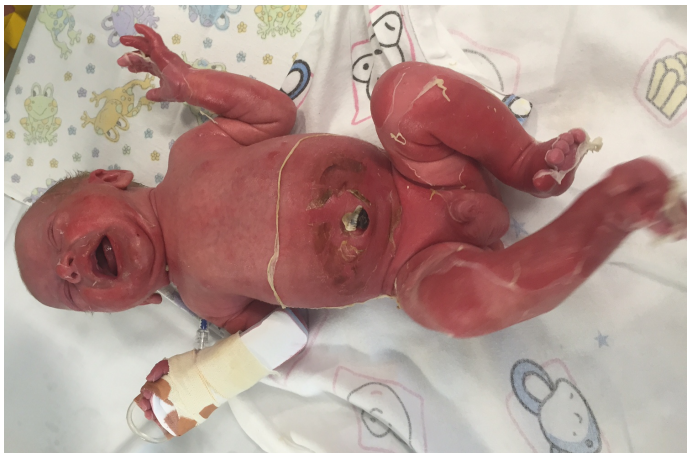
Distressed infant/child looks reasonably well
Distributio - face, chest, abdo, perineum, front of legs
Desquamation to… Associated epidermal flaking/peeling…
Widespread erythematous (macular) rash (middle photo above)
No involvement of MM
Dx staphylococcal scalded skin syndrome
Distressed infant/child looks reasonably well
Distributio - face, chest, abdo, perineum, front of legs
Desquamation to… Associated epidermal flaking/peeling…
Widespread erythematous (macular) rash (middle photo above)
No involvement of MM
Dx staphylococcal scalded skin syndrome
PromptDifferentials of desquamating rash
ResponseStaphylococcal scalded skin syndrome - exotoxin from staph infection
Drug reaction - SJS/TEN
Kawasaki disease
Scarlet fever
Staph or strep infection (non exotoxin)
Bullous impetigo
Dermatitis - contact/exfoliative
Burns - chemical/thermal
NAI
There were not consistent answers - seems anything is accepted really
Drug reaction - SJS/TEN
Kawasaki disease
Scarlet fever
Staph or strep infection (non exotoxin)
Bullous impetigo
Dermatitis - contact/exfoliative
Burns - chemical/thermal
NAI
There were not consistent answers - seems anything is accepted really
PromptStaphylococcal scalded skin syndrome - overview
ResponseAka “Ritters Disease” - a potentially serious condition of young infants (occasionally adults) in which the skin becomes reddened and tender and then peels off giving the appearance of a scald. The area of skin loss may be quite extensive and is usually centered on the armpits and groin. The underlying cause is an infection by certain bacteria of the genus staphylococcus. It is contagious and may occur in clusters.
Treatment is by antibiotics (usually IV) and careful nursing to prevent skin damage
Oxford med dictionary
Treatment is by antibiotics (usually IV) and careful nursing to prevent skin damage
Oxford med dictionary
PromptManagement of Staphyloccal Scalded Skin Syndrome
ResponseFluid resuscitation - N/S bolus if markers of shock - 20 mL/kg N/S
Check BSL and treat hypoglycaemia
Temperature control - potential for hypothermia - keep warm and monitor core temperature
IV antibiotics - Flucloxacillin 50 mg/kg QID - Swab and send for MCS to guide treatment
Analgesia - IV opioids? Morphine 0.1mg/kg doses. Anticipate need for infusion
Dressings
Paediatric admission +/- Dermatology consultation for emoliant advice
Check BSL and treat hypoglycaemia
Temperature control - potential for hypothermia - keep warm and monitor core temperature
IV antibiotics - Flucloxacillin 50 mg/kg QID - Swab and send for MCS to guide treatment
Analgesia - IV opioids? Morphine 0.1mg/kg doses. Anticipate need for infusion
Dressings
Paediatric admission +/- Dermatology consultation for emoliant advice
PromptSCARLET FEVER
ResponseA highly infectious disease caused by a strain of streptococcus bacteria that produces toxins. Symptoms begin 2-4 days after exposure and include fever, tonsillitis, and characteristic widespread scarlet rash. The tongue is also affected, initially covered by thick white material, it then becomes bright red (Strawberry tongue). Treatment with antibiotics shortens the course of the disease and reduces the risk of secondary complications which include kidney and ear inflammation.
- Oxford med dictionary
Prompt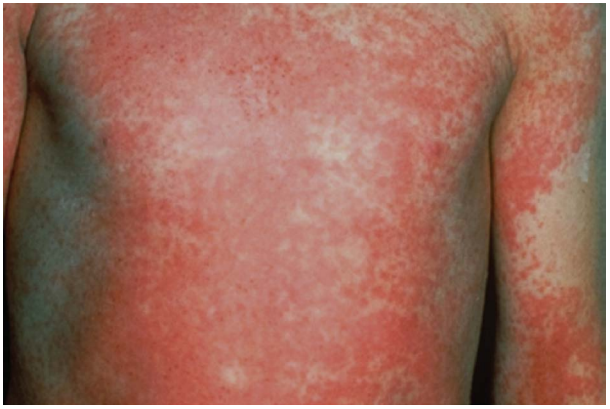
Response5 yo with exudate on tonsils
Erythematous rash
Macular (Morbiliform)
Widespread with areas of confluence on trunk and limbs
Macpap skin rash resembling that of measles - Oxford med dictionary
Dx = scarlet fever
Scarlet-fever type rash - blanching, sandpaper-like rash, usually more prominent in skin creases, flushed face/cheeks with peri-oral pallor (GAS) - RCH
DDx
Measles (Rubeola)
Rubella
Enterovirus
Drug rash (EBV with amoxicillin)
Erythematous rash
Macular (Morbiliform)
Widespread with areas of confluence on trunk and limbs
Macpap skin rash resembling that of measles - Oxford med dictionary
Dx = scarlet fever
Scarlet-fever type rash - blanching, sandpaper-like rash, usually more prominent in skin creases, flushed face/cheeks with peri-oral pallor (GAS) - RCH
DDx
Measles (Rubeola)
Rubella
Enterovirus
Drug rash (EBV with amoxicillin)
PromptManagement of Scarlet fever
ResponseSupportive management is adequate for most sore throats including scarlet fever - RCH
Answer:
Penicillin with dose - Treatment of Group A strep pharyngitis: Phenoxymethylpenicillin 15mg/kg BD x 10 days
Analgesia
Antipyretics
Hydration
Answer:
Penicillin with dose - Treatment of Group A strep pharyngitis: Phenoxymethylpenicillin 15mg/kg BD x 10 days
Analgesia
Antipyretics
Hydration
PromptComplications of scarlet fever
ResponseRenal failure
Rheumatic heart disease
Abscess - peritonsilar/retropharyngeal
Epiglotitis/bacterial tracheitis
Bacteraemia/sepsis
Hepatitis
Rheumatic heart disease
Abscess - peritonsilar/retropharyngeal
Epiglotitis/bacterial tracheitis
Bacteraemia/sepsis
Hepatitis
PromptERYTHEMA MULTIFORME
ResponseSee Derm