PAEDIATRICS
FOREIGN BODY ASPIRATION
Also in ENT
PromptClinical features of foreign body aspiration
ResponseHistory
- Choking episodes/sudden onset
- Playing with something in mouth
- Missing toy
- Focal wheeze, monophonic
- Focal crackles
- Unilateral hyperinflation
PromptDifferential diagnosis of foreign body aspiration
ResponseAsthma - Prolonge expiratory phase, generalised polyphonic wheeze, history of asthma/atopy
Viral pneumonititis - Viral prodrome, cough, rhinorrhoea, fevers, sick contacts
Allergic reaction - associated rash, known allergy exposure, angiooedema
Cardiac failure - Known cardiac disease, SOB with feeding, SOB night/when flat, Oedema, failure to thrive
Reflux - Difficulty/pain on feeding, Nocturnal cough, bad breath, cavities
Viral pneumonititis - Viral prodrome, cough, rhinorrhoea, fevers, sick contacts
Allergic reaction - associated rash, known allergy exposure, angiooedema
Cardiac failure - Known cardiac disease, SOB with feeding, SOB night/when flat, Oedema, failure to thrive
Reflux - Difficulty/pain on feeding, Nocturnal cough, bad breath, cavities
PromptComplications of foreign body aspiration
ResponsePneumonia
Abscess
Distal collapse
bronchiectasis
Abscess
Distal collapse
bronchiectasis
Prompt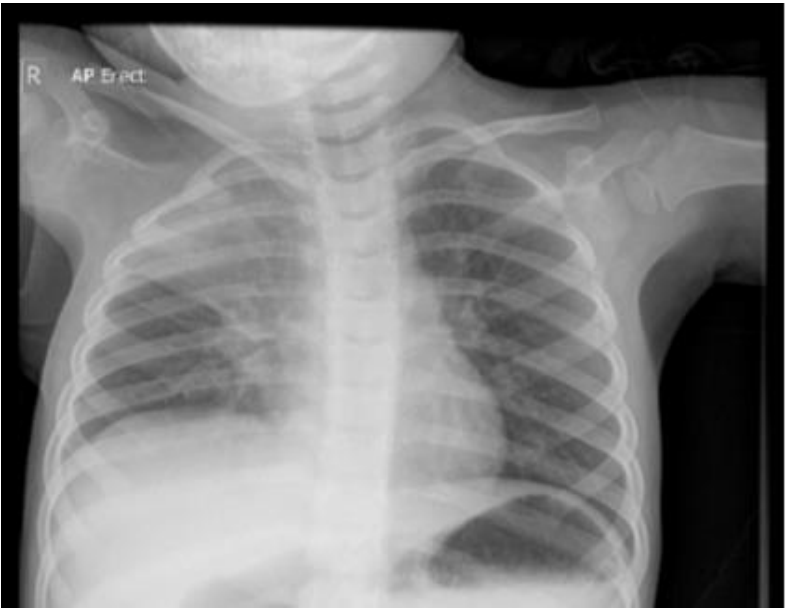
ResponseStem: A 3-year-old boy presents to the ED with wheezing and SOB for 2/7. His mother feels that his symptoms are getting progressively worse. His observations are: RR 40, BP 90/50, HR 150 and Sats 92% RA.
Raised R hemidiaphragm
Collapse R upper lobe
Consolidation of R upper lobe
Deteriorates with WOB - MGMT if crashing:
HFNP O2, IVF, Bronchodilator
Organise bronchoscopy
Most likely Dx = inhaled foreign body
I have no idea why this is the diagnosis. I would have said pneumonia. Maybe localised wheeze vs decreased entry?
Raised R hemidiaphragm
Collapse R upper lobe
Consolidation of R upper lobe
Deteriorates with WOB - MGMT if crashing:
HFNP O2, IVF, Bronchodilator
Organise bronchoscopy
Most likely Dx = inhaled foreign body
I have no idea why this is the diagnosis. I would have said pneumonia. Maybe localised wheeze vs decreased entry?
PromptFOREIGN BODY - CHOKING
Response
Prompt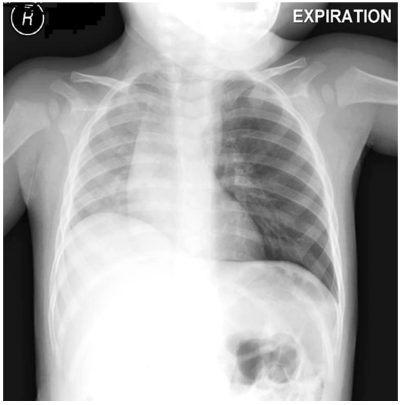
ResponseMediastinal shift to the right on expiration
Increased lucency of left lung on expiration
Hyperexpansion of left lung on expiration
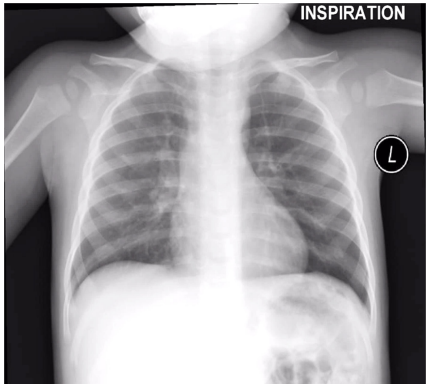
Normal inspiratory film
Dx = Foreign body in left main bronchus
Increased lucency of left lung on expiration
Hyperexpansion of left lung on expiration
Normal inspiratory film
Dx = Foreign body in left main bronchus
PromptExplain Cough, facial petechiae, tug without stridor
ResponsePatechiae due to high venous pressures suggestive of significant choking episode
Cough due to tracheobronchial irritation
Indrawing and tracheal tub in absence of stridor suggestive of intrathoracic airway obstruction
Cough due to tracheobronchial irritation
Indrawing and tracheal tub in absence of stridor suggestive of intrathoracic airway obstruction
PromptFeatures of effective cough
ResponseCrying, speech, vocalisation
Loudness of cough
Able to breathe before coughing
Child alert
Loudness of cough
Able to breathe before coughing
Child alert
PromptPre-hospital management of choking
ResponseEffective cough - Encourage coughing, send for help, continue to check casualty
Ineffective cough and responsive
Ineffective cough and responsive
- Send for help
- 5 back blows
- If not effective >> 5 chest thrusts
- Send for help
- Start CPR - Open airway, 2 rescue breaths, CPR 15:2, Check for foreign body, intubation
PromptManagement of inhaled foreign body if UNRESPONSIVE
ResponseAttempt bag/mask ventilation (Anaesthetic circuit if able as higher pressure)
Perform direct laryngoscopy with Magills to remove FB
Plan A - intubate if unable to remove FB - (TV needs to be adjusted as only ventilating one lung to prevent barotrauma)
Plan B - LMA
May need needle cric if a/b fails
OT for EUA by ENT fi able to adequately oxygenate
Perform direct laryngoscopy with Magills to remove FB
Plan A - intubate if unable to remove FB - (TV needs to be adjusted as only ventilating one lung to prevent barotrauma)
Plan B - LMA
May need needle cric if a/b fails
OT for EUA by ENT fi able to adequately oxygenate
PromptMEDIASTINAL MASS
Response
Prompt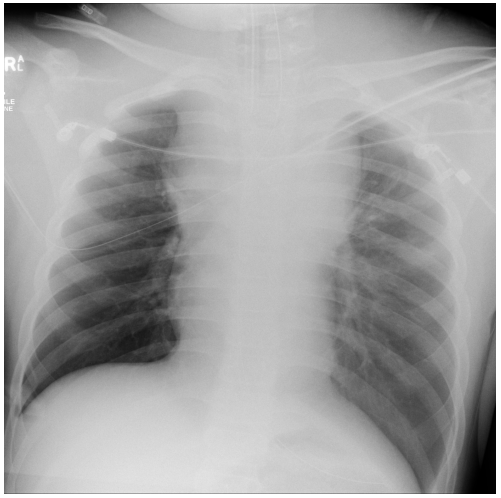
ResponseObvious mass - symmetrical and extends to hila bilaterally
Mass likely mediastinal
Patient is intubated - ETT in satisfactory position
L lung hypoinflation is suggestive of L main bronchus compression by mass or poor ventilation from ETT tube
Increased opacity of L lung may be due to L upper lobe collapse
No evidence of other masses/cardiomegaly
No obvious sign of pleural effusion (L costophrenic angle not visible)
No sign of bony involvement
Mass likely mediastinal
Patient is intubated - ETT in satisfactory position
L lung hypoinflation is suggestive of L main bronchus compression by mass or poor ventilation from ETT tube
Increased opacity of L lung may be due to L upper lobe collapse
No evidence of other masses/cardiomegaly
No obvious sign of pleural effusion (L costophrenic angle not visible)
No sign of bony involvement
PromptDifferentials for above
ResponseLymphoma
TB
Thymic cyst, Thymoma, or thymolipoma
Neuroblastoma
Thyroid mass (rare in children)
Germ cell neoplasm eg: Teratoma
Sarcoidosis
Vascular defect - aortic aneurysm
TB
Thymic cyst, Thymoma, or thymolipoma
Neuroblastoma
Thyroid mass (rare in children)
Germ cell neoplasm eg: Teratoma
Sarcoidosis
Vascular defect - aortic aneurysm