SPINE - NON TRAUMA + TRAUMA
IMAGING - TRAUMA SPINE
PromptList NEXUS criteria for C spine Imaging
ResponseNSAID
Neurologic deficit
Spinal tenderness
Altered LOC
Intoxication
Distracting injury
Neurologic deficit
Spinal tenderness
Altered LOC
Intoxication
Distracting injury
PromptCanadian C spine Rule
(Has been an OSCE)
(Has been an OSCE)
Response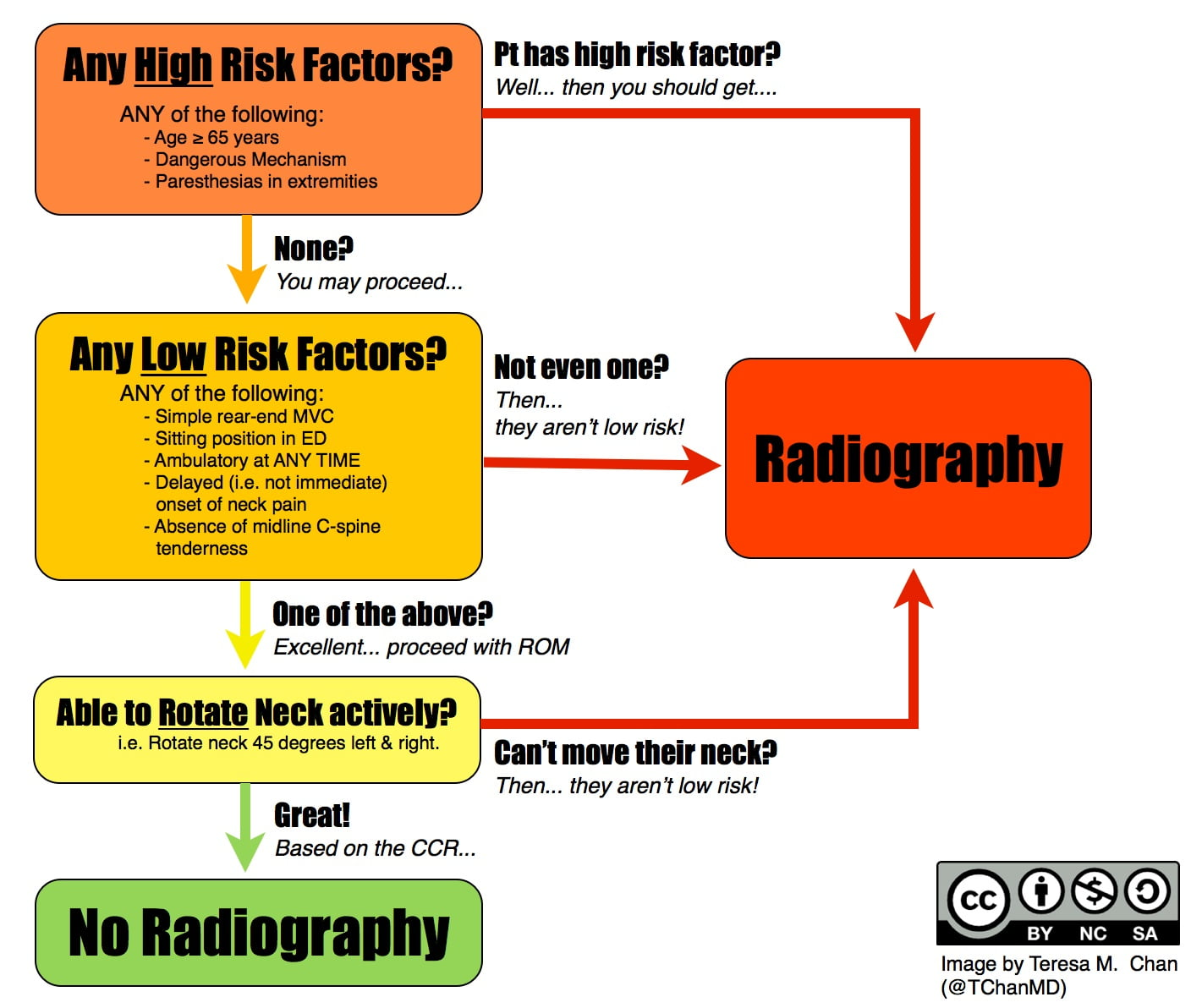
PromptList exclusion criteria for the Canadian C spine rules precluding its use
ResponseAge <16 years old
Non-trauma cases, Minor injuries (ie simple laceration) and did not meet inclusion criteria
GCS<15
Grossly abnormal VS
Injured >48hrs previously
Penetrating trauma
Acute paralysis
Known vertebral disease (ie RA, spine stenosis, previous C-spine injury, ankylosing spondylitis)
Returned for reassessment of same injury
Pregnant
Non-trauma cases, Minor injuries (ie simple laceration) and did not meet inclusion criteria
GCS<15
Grossly abnormal VS
Injured >48hrs previously
Penetrating trauma
Acute paralysis
Known vertebral disease (ie RA, spine stenosis, previous C-spine injury, ankylosing spondylitis)
Returned for reassessment of same injury
Pregnant
PromptThe Canadian C spine rule mandates C spine radiography in which patients
ResponseAge >65
Dangerous mechanism
Paraesthesias in extremities
Dangerous mechanism
Paraesthesias in extremities
PromptFeatures on history or examination that would suggest need for imaging
ResponseNeck pain
Traumatic torticollosis
Focal neurological deficit
Altered mental status
Falling on head (axial load) (ie candidate must specify this from mechanism)
Medical conditions predisposing to C-spine injury (long list) –
Traumatic torticollosis
Focal neurological deficit
Altered mental status
Falling on head (axial load) (ie candidate must specify this from mechanism)
Medical conditions predisposing to C-spine injury (long list) –
- Down syndrome
- Klippel-Feil syndrome
- Achondroplasia
- Ehlers-Danlos
- Marfan syndrome
- Osteogenesis Imperfecta
- Larsen syndrome
- Juvenile RA
- Juvenile ankylosing spondylitis
- Rickets
- Previous history of C-spine injury or surgery
- Renal osteodystrophy
- Occult congenital deformity such as odontoideum
PromptPros/cons of CT vs MRI
ResponseCT:
∙ Bony structures are better detailed
∙ Usually readily available cf MRI
∙ Scan itself is quick cf MRI
∙ Less expensive
∙ No risk to medical implants/metal
∙ No noise / claustrophobia issues
∙ Faster reporting / EPs more comfortable to report themselves
MRI:
∙ Better at providing detail of non bony structures
∙ No radiation exposure
∙ Very few side effects with MRI constrast
∙ Can detect subtle bony damage …in this patient will provide more answers than if CT was first line
∙ Usually required for surgical planning
∙ Bony structures are better detailed
∙ Usually readily available cf MRI
∙ Scan itself is quick cf MRI
∙ Less expensive
∙ No risk to medical implants/metal
∙ No noise / claustrophobia issues
∙ Faster reporting / EPs more comfortable to report themselves
MRI:
∙ Better at providing detail of non bony structures
∙ No radiation exposure
∙ Very few side effects with MRI constrast
∙ Can detect subtle bony damage …in this patient will provide more answers than if CT was first line
∙ Usually required for surgical planning
PromptIndications for MRI in C spine fracture
ResponseComplete or incomplete neurological deficits
Deteriorating neurological status
Suspected ligamentous or intervertebral disc injury
Deteriorating neurological status
Suspected ligamentous or intervertebral disc injury
Prompt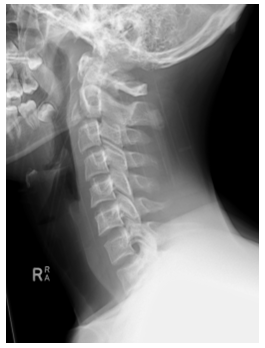
ResponseAnterior-inferior Tear drop # of C2 Mild Prevertebral soft tissue swelling Mild retrolisthesis of C2 on C3
(Question was about central cord)
(Question was about central cord)
Prompt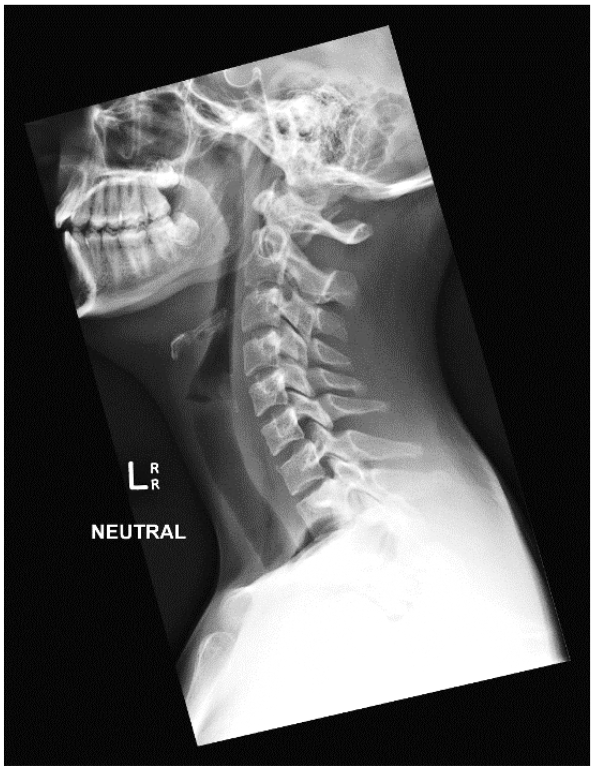
ResponseSoft tissue swelling in front of C6/7
Antero-superior corner fracture C7
Disruption of posterior spinal line
Widening between spinous processes C6 – C7
= Unstable fracture cervical spine with posterior ligamentous disruption
Antero-superior corner fracture C7
Disruption of posterior spinal line
Widening between spinous processes C6 – C7
= Unstable fracture cervical spine with posterior ligamentous disruption
Prompt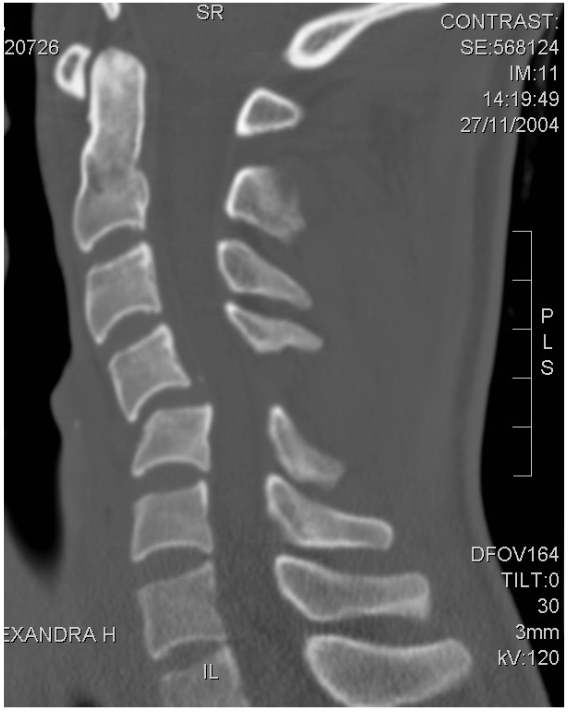
ResponseAnterolisthesis C4 on 5 approx 25%
Widening of interspinous space (or loss of continuity at ligamentum flavum)
Loss of any of the spinal ‘lines’
Significant Anterior soft tissue swelling at C4/5
There are no other injuries
Widening of interspinous space (or loss of continuity at ligamentum flavum)
Loss of any of the spinal ‘lines’
Significant Anterior soft tissue swelling at C4/5
There are no other injuries
Prompt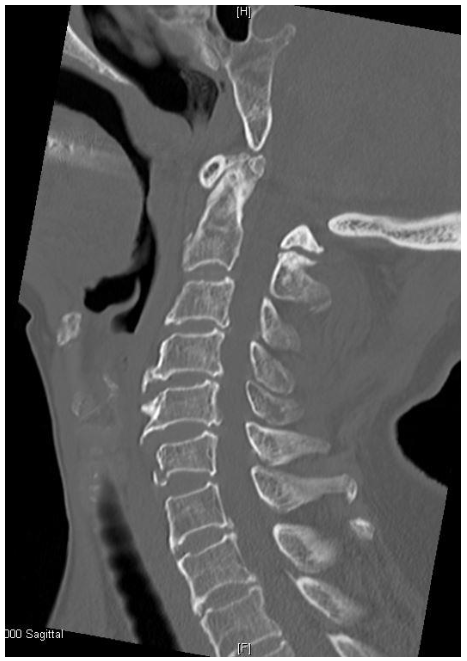
Response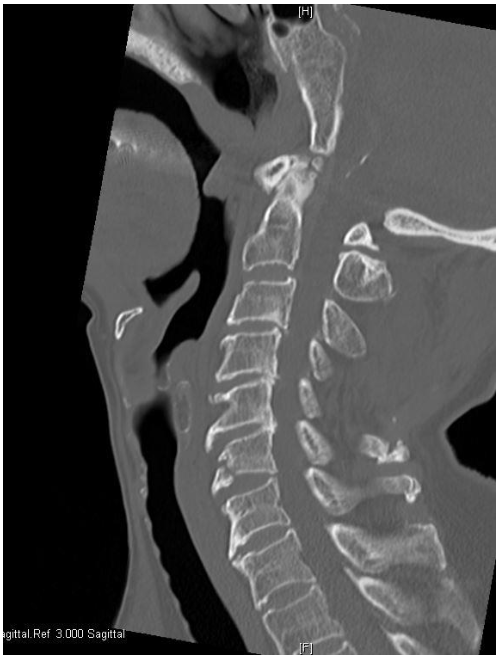
Teardrop fracture of C6
degenerative changes
spinous process fracture c6
Teardrop fracture of C6
degenerative changes
spinous process fracture c6
Prompt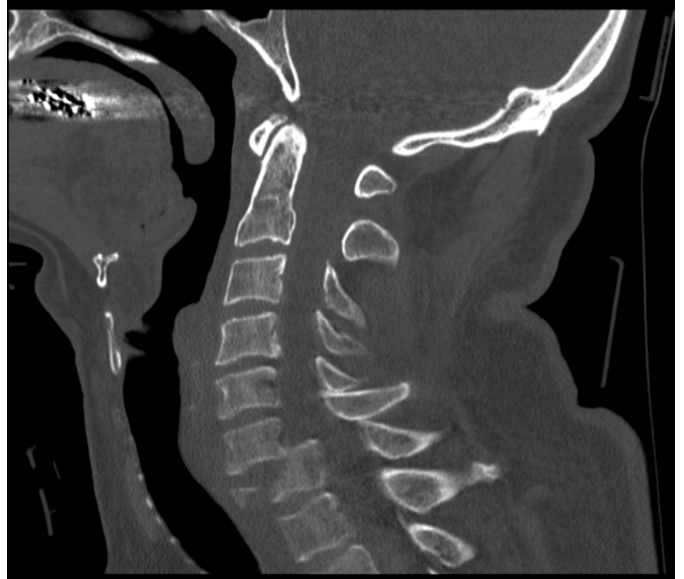
ResponseAnterolisthesis >50% C6/C7 or bilateral facet dislocation C6/C7
Fracture of C7 vertebral body
Retropulsion of C7 into spinal canal
Widened interspinous distance C6/C7
Pre-vertebral soft tissue swelling
Fracture of C7 vertebral body
Retropulsion of C7 into spinal canal
Widened interspinous distance C6/C7
Pre-vertebral soft tissue swelling
Prompt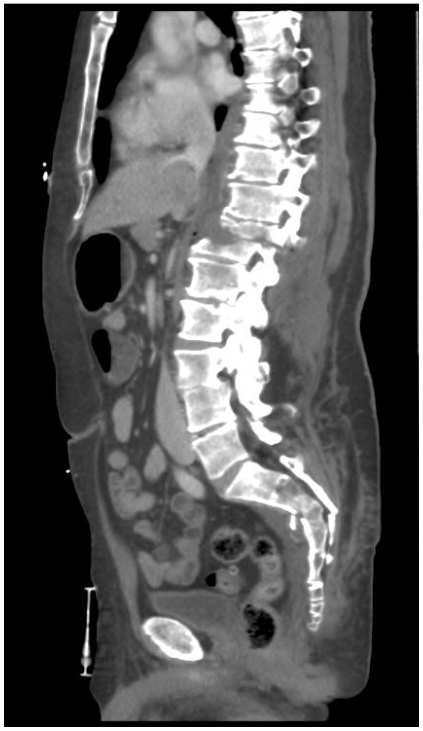
ResponseDisplaced Chance type fracture of T12 vertebra
Ventral displacement of distal vertebral column
3 column fracture (ie unstable)
Likely retropulsion into spinal canal
S3 fracture
Ventral displacement of distal vertebral column
3 column fracture (ie unstable)
Likely retropulsion into spinal canal
S3 fracture
Prompt6 yo M - Axial Loading injury
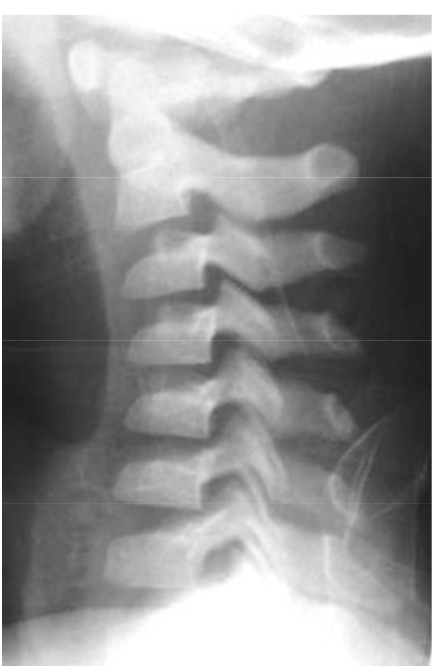
ResponseNormal xray - Pseudosubluxation C2/3 and C3/4 - Normal Swischuk line
Prompt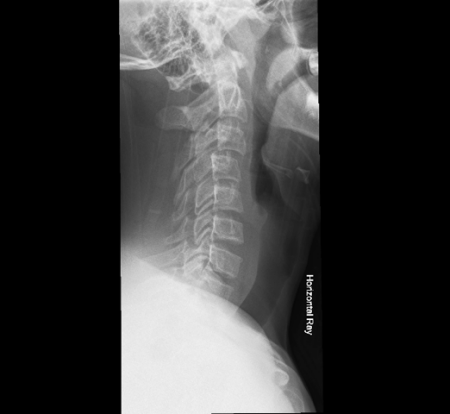
ResponseDisruption of the anterior and posterior vertebral line at C3/4 with ~5mm of anterior displacement
= Acute cervical facet joint dislocation
= Acute cervical facet joint dislocation
Prompt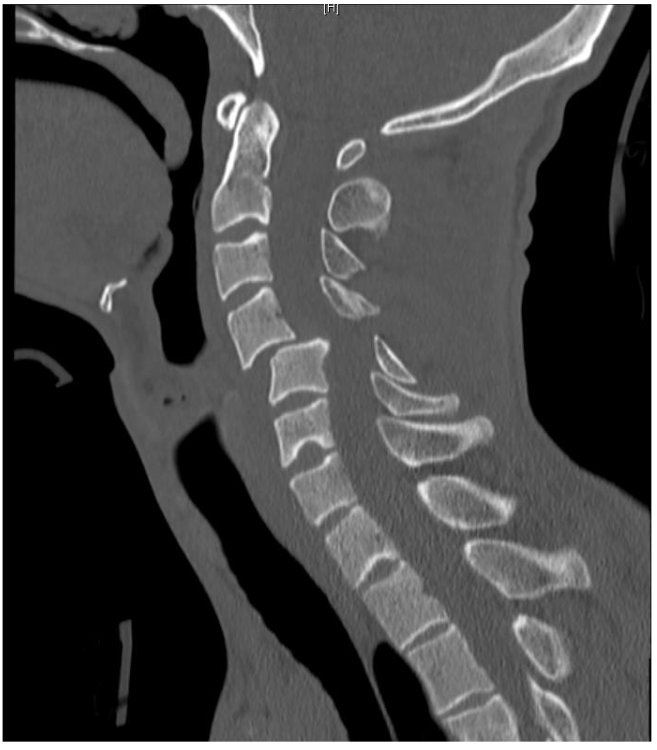
ResponseAnterolisthesis (anterior displacement) of C4 on C5 without obvious fracture
Narrowing of vertebral foramen at this site
= Bilateral facet joint dislocation
Narrowing of vertebral foramen at this site
= Bilateral facet joint dislocation
Prompt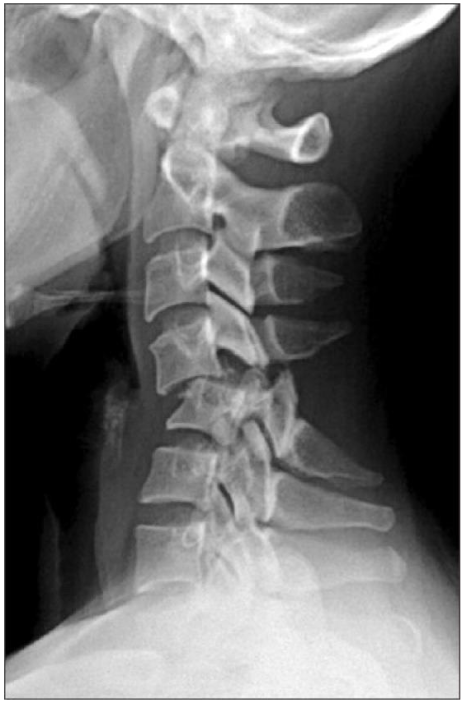
ResponsePre-vertebral soft tissue swelling in front of C5
Anterior listhesis C4 on C5 >50% vertebral body
Loss posterior spinal line
Bilateral perched facets
Widened space between C4/5 spinous processes
= C4/5 bilateral facet joint dislocation
Anterior listhesis C4 on C5 >50% vertebral body
Loss posterior spinal line
Bilateral perched facets
Widened space between C4/5 spinous processes
= C4/5 bilateral facet joint dislocation
PromptDove into swimming pool
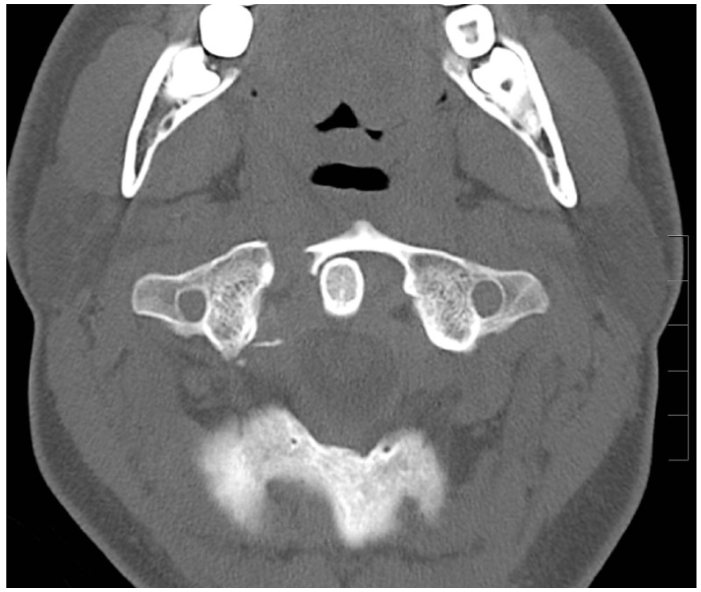
ResponseFracture through the anterior and posterior arches of C1 with lateral distraction
= Jefferson Fracture (mechanism = axial compression)
= Jefferson Fracture (mechanism = axial compression)