CARDIOLOGY
HEART FAILURE
PromptDefine heart failure
ResponseDunn: Inability of the heart to pump sufficiently to provide the full metabolic demands of the tissue
Hear failure is a complex clinical syndrome with typical symptoms and sings that generally occur on exertion but can also occur at rest (particularly when recumbent) it is secondary to an abnormality of cardiac structure or function that impairs the ability of the heart to fill with blood at normal pressure or eject blood suffient to fulfil the needs of the metabolising organs.
Hear failure is a complex clinical syndrome with typical symptoms and sings that generally occur on exertion but can also occur at rest (particularly when recumbent) it is secondary to an abnormality of cardiac structure or function that impairs the ability of the heart to fill with blood at normal pressure or eject blood suffient to fulfil the needs of the metabolising organs.
PromptLeft vs Right heart failure – Feel this is fair game
Remember Left is Lungs
Right is Rest of body
Remember Left is Lungs
Right is Rest of body
Response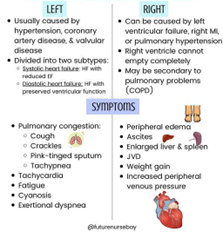
PromptClinical signs of APO
ResponseBilateral crackles
Raised JVP
Hepatomegaly
Tachycardia
Hypertension
Hypoxia
Raised JVP
Hepatomegaly
Tachycardia
Hypertension
Hypoxia
PromptCauses/precipitants of heart failure
ResponseCardiogenic
- Acute valvular dysfunction
- Acute arrhythmia, eg Atrial fibrillation
- Ischaemia/ACS
- Fluid overload, eg iatrogenic – fluid overload alone is too vague
- Non-compliance with cardiac medications/fluid restrictions
- Aspiration
- Inhalational injury
- SAH o Near drowning
- Pancreatitis
- Pulmonary embolism
- DIC
- Sepsis/intercurrent illness
- Renal failure
- Hepatic failure
- Medication changes/compliance issues
- Electrolyte derangement (ie hypokalaemia)
- Intercurrent illness
PromptManagement (mainly GTN/NIV, reasoning + contraindications)
Response
NIV – CPAP 10cm H20 – mechanism – preload reduction through impeding SVC/IVC emptying into Rt Heart (secondary effect of improving gas exchange at alveolar-capillary membrane) – End-Point SBP <140 or similar/ decreased resp distress/ normoxia
Contra - ALOC/exhaustion/numerous… Poor resp effort Vomiting, haemoptysis Patient unable to tolerate mask
GTN infusion – 10-50mcg/min IV - mechanism – vasodilation and preload reduction (mild benefit on myocardial work/oxygenation through afterload and vasodilatory effects) – end-point – SBP <140mmHg
Contra – Sildenafil in previous 24h, SBP <90
Some answers say SNiP – 0.5-4 mics/kg/min
GTN infusion - 5-100mcg/min (IV infusion 50mg in 50ml)
- CPAP/BiPAP - Details: 5-10cm H20 PEEP/EPAP, IPAP less important here
NIV – CPAP 10cm H20 – mechanism – preload reduction through impeding SVC/IVC emptying into Rt Heart (secondary effect of improving gas exchange at alveolar-capillary membrane) – End-Point SBP <140 or similar/ decreased resp distress/ normoxia
Contra - ALOC/exhaustion/numerous… Poor resp effort Vomiting, haemoptysis Patient unable to tolerate mask
GTN infusion – 10-50mcg/min IV - mechanism – vasodilation and preload reduction (mild benefit on myocardial work/oxygenation through afterload and vasodilatory effects) – end-point – SBP <140mmHg
Contra – Sildenafil in previous 24h, SBP <90
Some answers say SNiP – 0.5-4 mics/kg/min
PromptCXR signs of APO
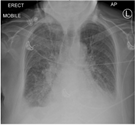
ResponseBilateral interstitial infiltrates
Bilateral small to moderate pleural effusions
Upper lobe venous diversion
Cardiomegaly (although AP film)
Bilateral small to moderate pleural effusions
Upper lobe venous diversion
Cardiomegaly (although AP film)